- Whatsapp: 8618958900507
- Email: [email protected]


Pipe fittings can be joined several ways, and choosing the wrong one causes trouble down the line. Butt weld is the most involved — not cheap and not easy to install — but in high-pressure, large-diameter and hygienic service there is almost no substitute.
This article covers three things: what butt welding is, what types exist, and when it is the wrong choice.
The idea is straightforward: the fitting end and the pipe end are cut with the same bevel, brought together and welded around the joint to form a full-penetration weld.
The key term is full penetration. Once the weld is through, the fitting and the pipe are continuous at the joint — the inner wall is flush, with no step and no gap. Every benefit that follows comes from that one sentence.

Section view of a butt weld joint
By comparison: a threaded joint can loosen; a socket weld always leaves an annular gap on the inside where fluid can sit; a flanged joint adds two sealing faces and a gasket. A butt weld has a single joint, and once welded it becomes part of the pipe. That is why butt welding costs more to install but less to live with.
Here are the main types and what to watch for on each:
| Type | What it does | Watch out for |
| Elbow 90° / 45° | Changes direction | Radius selection is its own topic — LR vs SR, see the elbow guide |
| Return 180° | Reverses flow | One fitting replaces two elbows and a weld |
| Tee, straight / reducing | Branches off a run | Reducing outlet must be stated, not assumed |
| Cross | Four-way branch | Higher stress concentration than a tee; rarely used |
| Reducer, concentric | Reduces size on one axis | Not for horizontal pump suction |
| Reducer, eccentric | Reduces size, one side flat | Flat side up; the wrong way round traps gas and cavitates the pump |
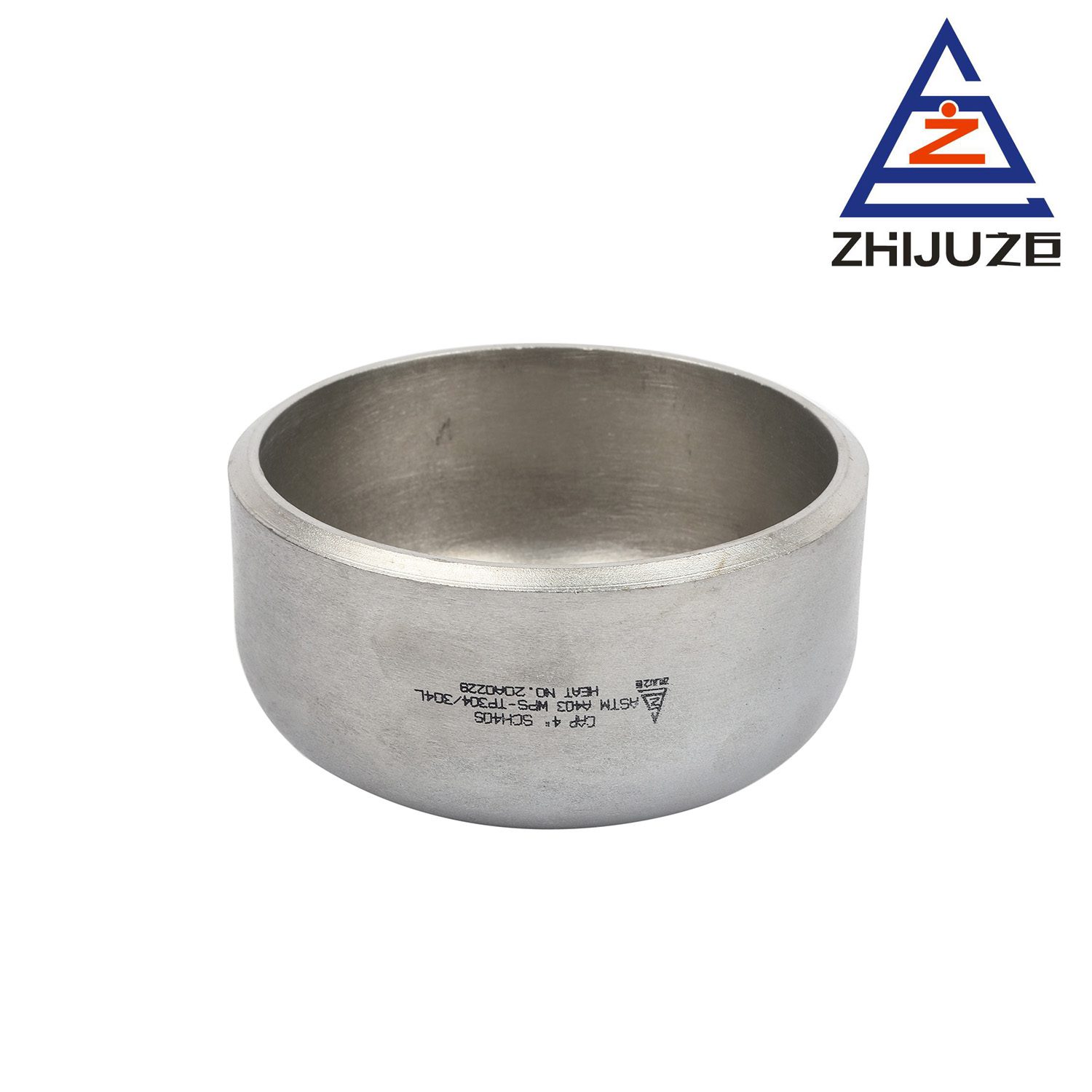
| Cap | Closes a line end | Permanent — unlike a blind flange |
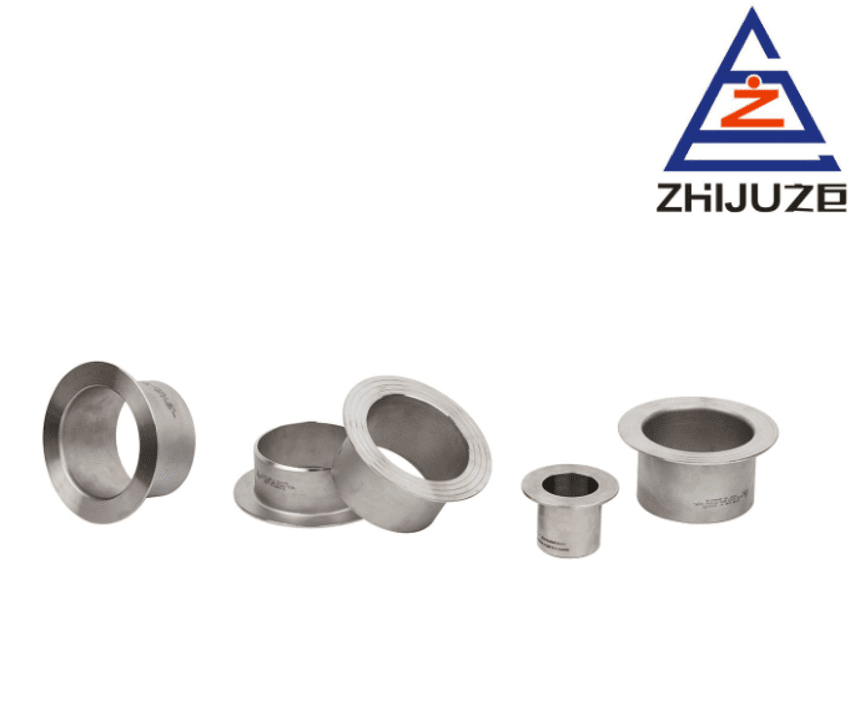
| Lap joint stub end | Pairs with a loose flange | Carries no pressure advantage; the flange does the work |
Reverse the question — butt welding is not the answer everywhere:
These are not cases of butt welding being bad — they are cases of it being used in the wrong place. Before choosing a connection method, ask whether this line will ever be opened. That single question saves more rework than any spec detail.
Wall thickness is set by the schedule (Sch), and stainless and carbon steel use two series: stainless uses Sch 5S / 10S / 40S / 80S (ASME B36.19M), carbon uses Sch 40 / 80 / 160 / XXS (ASME B36.10M). Both can be written “40”, but 40S and 40 are not the same thickness — do not swap them.
One thing to remember: fitting wall thickness follows the pipe, not the pressure rating. The pipe is bought by wall thickness, the fitting by schedule — if the two do not line up, the bevels will not line up at goods-in. Write both on the same line of the order.
Material grades follow ASTM: A403 for austenitic fittings, A815 for duplex, A234 for carbon steel, B366 for high-alloy and nickel grades. Write the grade in full — “SS316” does not tell you whether you are getting 316 or 316L, and their weldability differs.
ZHIJU data: sizes DN15–DN2000, grades TP304L / 316L / 310 / duplex 2205 / 2507 — confirm the current range at the time of enquiry.
Sanitary-grade fittings are often butt welded, which makes the two easy to confuse — but they are not the same thing. Butt weld is a connection method and a dimensional standard (ASME B16.9). Sanitary is a surface and cleanability specification — ASME BPE, ISO 2037, DIN 11850 and 3-A govern internal roughness, crevice-free geometry and CIP/SIP capability.
A sanitary fitting can be butt welded, but not every butt weld fitting is sanitary. If you do not state the sanitary standard, you may get an industrial-grade fitting whose bore finish is too rough and whose weld is oxidised inside — it fails hygiene testing. If you need sanitary, write the sanitary standard and the Ra value, not just “butt weld”.
Bring it down to four questions, asked in order:
Tell us your line list. We will mark the joints that should not be butt welded — and say what to use there instead.
Q1. What is the difference between butt weld and socket weld fittings?
A butt weld joint is full-penetration — the fitting and pipe are welded edge to edge, leaving a flush bore. A socket weld joint takes the pipe into a recess and seals with an external fillet; inside, it always leaves an annular gap where fluid can sit. That gap is the deciding factor on corrosive, hygienic or steam-cleaned service. Socket weld is faster and cheaper to install, and on small-bore, low-pressure utility lines it is often the practical choice.
Q2. Do butt weld fittings have a pressure class?
No. ASME B16.9, which governs butt weld fitting dimensions, does not assign pressure classes — there is no such thing as a “B16.9 Class 3000” fitting. The pressure-temperature rating of a butt weld fitting follows the pipe it matches: same material, same wall thickness. If a quotation lists a class for a B16.9 elbow, that is worth a clarification. (The full explanation lives in the ASME B16.9 article.)
Q3. Butt weld is a connection type — does that make the fitting sanitary?
No. Sanitary is a surface and cleanability specification — ASME BPE, ISO 2037, DIN 11850 and similar standards govern internal roughness, crevice-free geometry and CIP/SIP capability. A standard B16.9 fitting can be butt welded into a food or pharma line and still fail hygiene tests if the bore finish is wrong or the weld is oxidised inside. If you need sanitary, specify the sanitary standard and the Ra value — not just “butt weld”.

THE QUALITY IS THE SOUL OF AN ENTERPRISE
Zhejiang Zhiju Pipeline Industry Co., Ltd
Official Website: https://www.zhiju-steel.com
Privacy Policy
Copyright ZHEJIANG ZHIJU PIPELINE INDUSTRY CO., LTD SUPPORT BY :JUNJ
 Optimized by Seraphinite Accelerator