- Whatsapp: 8618958900507
- Email: [email protected]


In the complex world of industrial plumbing, the blind flange is the ultimate dead-end—but in a good way. Unlike other piping flange types that let fluids flow through, this “boreless” component is designed to stop them cold. Whether you are sealing off a line for safety or prepping for a future upgrade, understanding this solid steel guardian is key to keeping your business running without a leak.
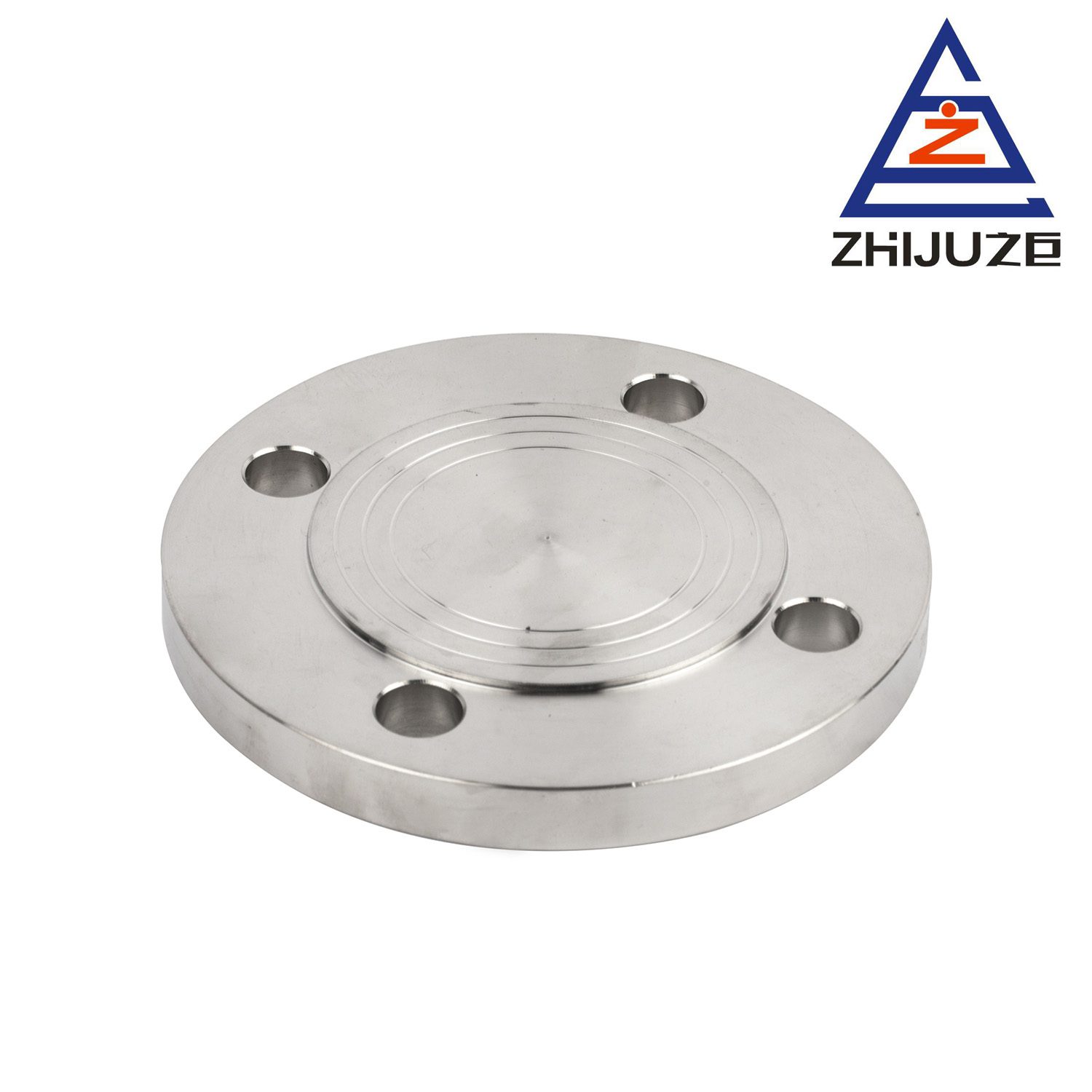 What is a Blind Flange?
Physical Characteristics
At first glance, it looks like a heavy steel pancake. It’s a solid, disc-like plate with bolt holes around the edge but absolutely no center hole. While other flanges are like tunnels, the blind flange is the wall. It’s forged to be smooth, flat, and incredibly dense.
Structural Mechanics: The High-Pressure Wall
Why is it so heavy? Because it takes more of a beating than almost any other part. In a normal pipe, pressure flows through the flange. In a blind setup, the internal pressure slams directly into the center of the disc. Because of this direct impact, a blind flange has to be built thicker and stronger to handle the bending stress without bowing like a plastic lid.
Face Designs for Every Seal
Depending on how tight a seal your business needs, you’ll see different faces on these discs. The RF (Raised Face) is the most common, using a small “lip” to concentrate pressure on the gasket. For those high-stakes, ultra-high-pressure jobs, you’ll see the RTJ (Ring Type Joint), which uses a metal ring squeezed into a groove to create a seal that won’t budge.
Absolute Pipeline Isolation
If you need to fix a pump or clean a tank without draining the entire factory, you need Pipeline Isolation. By bolting on a blind flange, you create a physical, “positive” shut-off. It’s much safer than relying on a valve that might leak or accidentally be turned on while your crew is working.
Rigorous System Testing
Before a new line goes live, you have to prove it can handle the heat. Engineers use blind flanges to seal off sections for hydrostatic pressure testing. You pump the line full of water, crank up the pressure, and wait. The blind flange holds the line tight so you can hunt for leaks elsewhere in the system.
Future-Proofing for Expansion
Smart builders leave “dead-ends” in their piping routes. By using a pipe end seal now, you leave yourself an easy “open door” for later. When your business grows next year, you just unbolt the blind flange and continue the pipe run—no cutting or heavy welding required.
Protecting High-Pressure Vessels
In critical repairs, you often need to isolate High-Pressure Vessels from the rest of the network. A stainless steel blind flange acts as a heavy-duty shield, ensuring that no gas or liquid can sneak back into the vessel while it’s being inspected.
A pipe cap is a permanent weld. A blind flange is a bolted connection. Here is why that matters:
The “Unbolt” Advantage: If you think you’ll ever need to get inside that pipe again for cleaning or inspection, go with the flange. You can unbolt it in minutes. A cap has to be cut off with a torch, which is messy and expensive.
Safety in Installation: Blind flange installation is a mechanical process—no sparks, no hot-work permits, just a wrench and some muscle. This makes it the go-to for environments where welding is too risky.
Long-Term Utility: While a cap might be cheaper today, the labor cost of cutting and re-welding a pipe later is huge. The removable nature of a flange makes it a far better investment for the life of your facility.
| Feature | Blind Flange | Pipe Cap |
| Connection Type | Bolted connection; can be unbolted in minutes. | Permanent weld; must be cut off with a torch. |
| Installation Safety | Mechanical process using a wrench; no sparks or hot-work permits needed. | Involves welding, which can be risky in certain environments. |
| Maintenance & Access | Easy access for cleaning or inspection. | Messy and expensive to remove for internal access. |
| Long-Term Cost | Better investment due to removable nature and lower future labor costs. | Cheaper initial cost, but high labor cost for cutting and re-welding later. |
A blind flange is only as good as the person installing it. If you rush the job, it will weep.
Preparation: Clean and Check
Before you even touch a bolt, look at the face. Is there a scratch? A tiny bit of rust? Even a hair-thin nick can create a path for a leak. Give it a good wipe, ensure the surface is dry, and pick a gasket that can handle your chemicals.
Alignment: Stay Level
Never “pull” a flange into place with the bolts. If the pipes aren’t aligned vertically and horizontally, you’ll put uneven stress on one side of the gasket. It might hold for a day, but eventually, that uneven squeeze will give out.
The Star Pattern: The Secret to a Seal
Don’t tighten bolts in a circle! You must use the “Star Pattern.” Tighten the top, then the bottom, then the far left, then the far right. This ensures the gasket gets squashed evenly all the way around, like the lid on a jar.
Adhering to Pressure Rating Limits
Every flange has a blind flange pressure rating. If you over-torque the bolts, you can actually warp the disc or crush the gasket until it splits. Always use a calibrated wrench to hit the exact numbers for your specific pressure rating.
Spotting Signs of Fatigue
Keep an eye out for “weeping”—tiny drops of moisture around the bolts. Also, check for bolt corrosion. If the bolts look like they are covered in orange fur, they are losing their strength.
Professional Cleaning Protocols
When you swap a gasket, don’t just shove the new one in. Use a brass brush to scrub the sealing surface, then wipe it clean with a lint-free cloth. You want that metal-on-gasket contact to be perfect.
Knowing When to Retire the Flange
After years of being hammered by pressure and repeatedly bolted and unbolted, metal gets tired. If you see the face start to “warp” (bow outward), it’s time to retire that flange and bring in a fresh forged one.
Why is a blind flange thicker than a standard flange?
Because it has to withstand the full force of the pressure at its center, preventing the metal from bending.
Can I use a blind flange for permanent pipeline termination?
Yes, but ensure you maintain it. Bolts can loosen over time, unlike a permanent weld.
What is the best gasket type for a stainless steel blind flange?
It depends on your media, but spiral wound gaskets are the “gold standard” for high-pressure stainless systems.
How do I choose between a forged vs. plate-cut blind flange?
Forged is always safer. Forging eliminates internal air pockets, ensuring the flange won’t crack under extreme pressure.
A blind flange might be the simplest-looking part of your piping system, but its job is arguably the most important. It’s the final line of defense for safety, testing, and future growth. By choosing high-quality stainless steel blind flanges and following a strict Maintenance and Repair schedule, you ensure your system stays flexible and, most importantly, leak-free. Ready to upgrade? Contact our team for technical specs and a custom quote for your next project.

THE QUALITY IS THE SOUL OF AN ENTERPRISE
Zhejiang Zhiju Pipeline Industry Co., Ltd
Official Website: https://www.zhiju-steel.com
Privacy Policy
Copyright ZHEJIANG ZHIJU PIPELINE INDUSTRY CO., LTD SUPPORT BY :JUNJ