- Whatsapp: 8618958900507
- Email: [email protected]


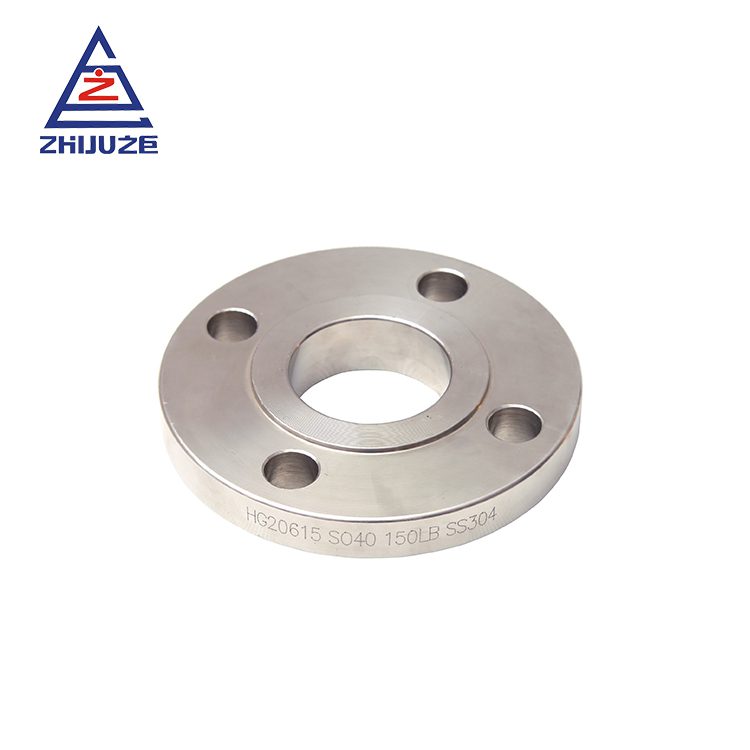
Think of a pipe flange as the “handshake” of your piping system. It’s the essential connector that lets you bolt pipes, valves, and pumps together instead of permanently welding everything shut. Whether you need to pop a section open for a quick cleaning or swap out a worn-out valve, flanges give your business the flexibility to keep things moving without cutting through solid steel.
The Anatomy of a Joint
A flange connection isn’t just a piece of metal; it’s a three-part team effort. You’ve got the flange faces (the flat ends), a gasket (the soft seal sandwiched in the middle), and the bolting tension (the muscle holding it all together). If one of these players slacks off, the whole system drips.
Creating a Seal
Imagine trying to squeeze a sponge between two plates. As you tighten the bolts, that compressive force squashes the gasket into the tiny, microscopic grooves of the flange face. This creates a solid, leak-proof barrier. It’s a mechanical assembly that turns raw pressure into a reliable seal, ensuring your liquids or gases stay exactly where they belong—inside the pipe.
Maintenance Advantages
Why not just weld everything? Because welding is permanent. If a pipe clogs or a pump dies, you’d have to bring in a torch, cut the line, and then weld it back—a massive headache that kills your uptime. With a flange connection, you simply unbolt, wipe the surfaces dry, swap the parts, and bolt it back up. It’s the difference between a zip and a permanent stitch.
When you walk into a warehouse or look at a blueprint, you’ll notice that not all flanges are built the same. Some have long, elegant necks, while others are just flat discs or have threads like a giant nut. Here are the primary pipe flange types you’ll run into most often:
Weld Neck Flange (WN): The Heavy Lifter
The Weld Neck has a long, tapered “neck” that joins to the pipe with a deep weld. It’s built for the rough stuff. When your system is screaming with high pressure or swinging between freezing and boiling temperatures, the WN flange spreads that stress out so the pipe doesn’t snap.
Slip On Flange (SO): The All-Rounder
As the name suggests, you just slide this flange right over the pipe. It’s thinner, easier to align, and much friendlier on your budget. It’s the go-to choice for lower-pressure lines where you want a fast, reliable fit without the bulk of a weld neck.
Blind Flange (BL): The Dead End
Ever need to stop a line dead in its tracks? That’s what a blind flange does. It’s a solid disc with no hole in the middle. It acts like a heavy-duty cap, sealing off the end of a system. It’s also a lifesaver for pressure testing—you bolt it on, blow air or water into the line, and check for leaks.
Socket Weld Flange (SW): Small but Mighty
These have a little “socket” or shoulder inside. You slide the small-diameter pipe in until it hits the seat, then weld the outside. It’s specifically engineered for high-pressure tubing where space is tight but you still need a rock-solid joint.
Threaded Flange (TH): No Spark, No Problem
Sometimes, you can’t have a welding torch anywhere near the pipes—maybe because of explosive gases or sensitive environments. Threaded flanges screw onto the pipe like a nut on a bolt. No heat, no sparks, just a tight mechanical fit.
Plate Flange (PL): The Simple Solution
A plate flange is basically a flat ring. It’s the most economical tool in the shed, perfect for water systems or low-pressure utility lines where you don’t need fancy hubs or tapered necks.
Material Integrity: 304L vs. 316L
Picking the right steel is like picking the right coat for the weather. TP304L stainless steel is great for general indoor or outdoor use—it’s tough and keeps the rust away. But if you’re working near the ocean or with harsh chemicals, you need the “big brother,” TP316L. It has added molybdenum which acts like a shield against salty air and acidic liquids.
Strength and Longevity: Forged vs. Plate
There’s a big difference between a flange cut out of a flat sheet and one that’s been hammered into shape. Forged flanges are created under intense heat and pressure, which aligns the “grain” of the metal. This makes them much stronger and more durable than plate-cut versions. They don’t just sit there; they handle the vibration and pressure of a working factory for decades.
Resistance to Corrosion
The secret sauce in stainless steel pipe flanges is chromium and nickel. These elements form an invisible “skin” that heals itself. Even if the flange gets scratched, the chromium reacts with oxygen to grow back that protective layer, keeping the metal from turning into a pile of rust.
Energy & Electricity: Think of massive power plants with high-pressure steam pipes. These lines use Weld Neck Flanges because a failure there isn’t just a leak—it’s a disaster.
Chemical & Defense: In these sectors, there’s zero room for error. You’ll often see specialized grades like TP321 used to handle extreme heat and aggressive chemicals without flinching.
Shipbuilding & Maritime: Saltwater eats standard steel for breakfast. Ships rely on Duplex S31803 fittings because they are nearly immune to the corrosive “bite” of the sea.
| Industry | Best Fitting / Grade | Reason for Use |
| Energy & Electricity | Weld Neck Flanges | Handles high-pressure steam and prevents disastrous leaks. |
| Chemical & Defense | TP321 | Manages extreme heat and aggressive chemicals without error. |
| Shipbuilding & Maritime | Duplex S31803 | Immune to the corrosive “bite” of saltwater and sea air. |
When you’re looking for a stainless steel flange manufacturer, don’t just look at the price tag. Look at how they treat the metal.
Quality Indicators: Check the surface. Is it smooth and clean, or are there tiny cracks and pits? Precision forging should look and feel solid.
The Importance of Traceability: Every single flange should have a “birth certificate.” This is called a Mill Test Certificate (MTC). It proves the metal is actually the grade they say it is. If the heat number on the flange doesn’t match the paper, walk away.
Certifications: Trust is good, but proof is better. Global buyers look for accreditation. These badges mean the manufacturer has to follow strict international rules for safety and quality.
Can I use a Slip-On flange for high-pressure steam?
Better not. Steam systems vibrate and expand. A slip on flange isn’t as strong at the joint as a weld neck, which handles that stress much better.
What is the difference between slip on flange vs weld neck?
Weld necks have a tapered hub for high-pressure durability; slip-ons slide over pipes for easier, low-pressure installation.
What is the difference between forged flanges vs plate flanges?
Forged flanges are hammered for superior strength; plate flanges are simply cut from flat steel for low-pressure use.
How do I choose between TP304L and TP316L for my project?
If it’s for standard water or indoor piping, 304L is perfect. If there’s salt, acid, or harsh chemicals involved, spend the extra bit on 316L. It’s cheaper than replacing a rusted pipe later.
Your entire facility’s safety might just depend on a single, well-made flange connection. Don’t settle for “good enough” when it comes to the parts holding your pipes together. If you need precision-engineered forged flanges that won’t let you down, reach out to our team. We’ll help you find the perfect fit for your next project.

THE QUALITY IS THE SOUL OF AN ENTERPRISE
Zhejiang Zhiju Pipeline Industry Co., Ltd
Official Website: https://www.zhiju-steel.com
Privacy Policy
Copyright ZHEJIANG ZHIJU PIPELINE INDUSTRY CO., LTD SUPPORT BY :JUNJ