- Whatsapp: 8618958900507
- Email: [email protected]


Marine desalination, fine chemical and pharmaceutical pipelines rely heavily on detachable lap-joint connections, where stainless steel stub ends serve as the core sealing component paired with loose flanges. Raw machined surfaces retain free iron particles, micro-pits and welding oxide layers, which easily trigger pitting corrosion under chloride, acid and thermal cycling. Without standardized surface finishing, these fittings will suffer seal leakage, medium contamination and frequent replacement within short service cycles. This article centers on best surface treatment to extend stainless steel stub end service life, sorting core finishing processes, scenario matching rules and post-processing operation norms, helping pipeline designers select suitable treatments to optimize the durability of every stub end fitting.
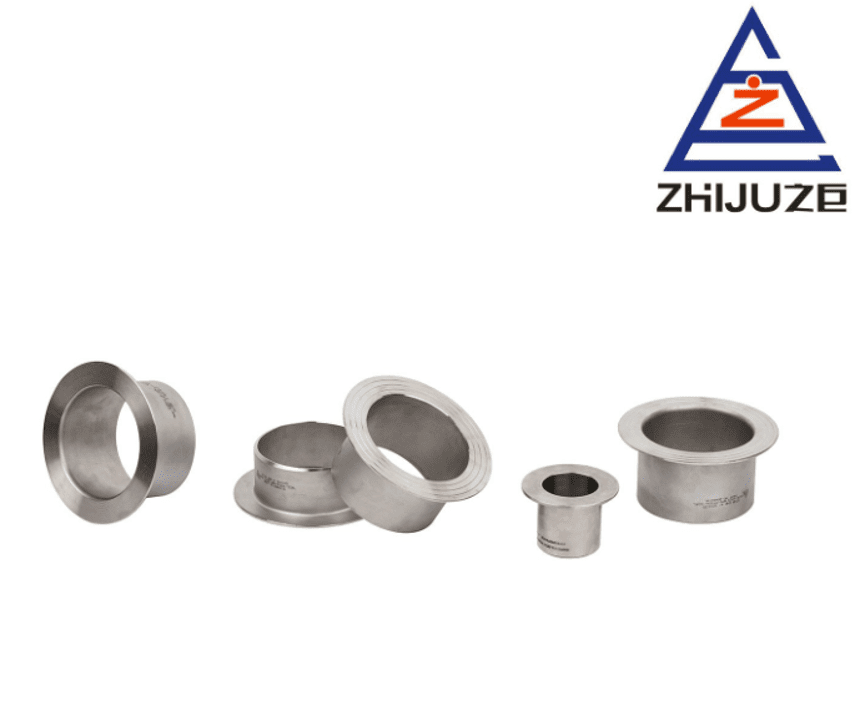
A flange stub forms a complete lap joint assembly together with lap joint flanges, classified as Type A/B/C per MSS SP-43 dimensional standards. Its protruding lap face allows matched flanges to rotate freely, eliminating labor-intensive bolt hole alignment during field assembly. As a typical stub end fitting, it is produced from 304, 316L or duplex stainless steel; though the base material carries inherent anti-corrosion performance, machining scratches and surface contaminants create corrosion initiation points. Compared with integral welding neck flanges, the split combination of flange with stub end greatly cuts the usage of high-cost stainless alloy, delivering obvious cost advantages for large-diameter industrial piping projects.
The long stub end complies with ASME B16.9 specifications, featuring an extended straight barrel section that disperses welding thermal stress and isolates flanges from heat-affected zones to avoid joint fatigue cracking. In high-temperature thermal oil circulation, offshore saltwater transmission and chemical reaction pipelines prone to thermal expansion, long-style variants buffer pipe displacement and reduce flow turbulence at flange transitions. For production lines requiring regular disassembly maintenance, these fittings balance pressure bearing capacity and construction convenience, making them the preferred solution for heavy-duty corrosive medium delivery systems.
Even premium stainless steel cannot resist harsh working environments alone; surface finishing builds a permanent protective barrier for all stub end with flange assemblies.
This section elaborates on how to improve corrosion resistance of stainless stub end via surface treatment. Untreated machining residues break the natural chromium oxide passive film on steel surfaces, accelerating local pitting in seawater or brine pipelines. Passivation and electropolishing remove surface free iron and reconstruct a dense chromium-rich protective layer, lifting anti-corrosion performance by two to four times. Field data shows finished components maintain stable operation for years in marine chemical loops, while untreated counterparts develop leakage within 12 months under chloride erosion.
Rough unprocessed inner walls trap solid particles and microbial residues during fluid transportation, leading to continuous abrasion and chemical erosion on the lap sealing surface. Uniform surface finishing eliminates micro-grooves and dead zones for medium retention, lowering fluid friction and reducing abrasion loss. Standardized finishing can extend the service cycle of each flange stub by over 60%, cutting unplanned downtime and spare part replacement costs for pipeline operation teams.
Four mainstream industrial finishing processes dominate the production of these pipe fittings, with distinct performance boundaries for different working conditions:
Passivation: Immerse fittings in citric or nitric acid solution to clear iron contaminants and regenerate passive film; low processing cost, suitable for general chemical stainless assemblies.
Electropolishing: Electrochemical polishing removes surface micro-defects to form mirror-smooth inner walls, mandatory for sterile pharmaceutical and food-grade pipelines.
Bead blasting: Glass bead spraying creates uniform matte texture, avoiding light reflection for outdoor marine exposed piping.
Mechanical brushing: Generates consistent linear grain patterns for low-corrosion circulating water pipelines, balancing appearance and basic rust resistance.
The table below clarifies matching relations between processes and stub end pipe fittings operating scenarios:
| Surface Process | Core Advantages | Applicable Working Scenarios |
| Passivation | Low cost, zero dimensional change | General chemical, water treatment stainless stub end |
| Electropolishing | Ultra-smooth, easy full CIP cleaning | Biopharmacy, high-purity fine chemical production lines |
| Bead blasting | Matte anti-reflection, uniform texture | Offshore marine, outdoor exposed piping layout |
| Brushed finish | Decorative grain, mild cost premium | Indoor low-pressure non-corrosive cooling water loops |
For procurement and engineering teams, cost-effective surface treatment for long stub end pipe fittings balances upfront processing expenditure and long-term maintenance losses.
Low-budget ordinary industrial projects: Adopt citric acid passivation, featuring short processing cycles and no sharp rise in single-piece cost, compatible with standard 304 long-style variants.
Mid-budget multi-scenario factories: Combine bead blasting and passivation, lifting outdoor anti-corrosion performance without the high expense of electropolishing.
High-end sterile or offshore projects: Electropolishing becomes a necessary investment; though unit processing cost rises, it avoids frequent disassembly cleaning and premature component replacement.
Matching surface processes to operating environments avoids over-engineering or insufficient protective performance
Sterile pharmaceutical & food processing: Prioritize electropolished stub end flange, inner surface roughness Ra ≤0.4μm to eliminate bacterial residue accumulation.
Chemical plant acid and brine transmission: Passivation is compulsory; duplex steel fittings can add bead blasting for extra surface protection.
Offshore seawater desalination pipelines: Bead blasting plus full passivation to resist salt fog atmospheric corrosion.
Indoor low-pressure cooling water circulation: Simple mechanical brushing matched with passivation meets basic anti-rust requirements
High-temperature thermal oil long stub end assemblies: Only passivation applies; polishing structures will fail under sustained high heat.

Following surface finishing options for long-lasting flange stub end, three core judging standards help lock the optimal surface process, also covering suitable surface processes for stub end with flange lifespan improvement:
Medium corrosivity: Chloride concentration above 500ppm requires electropolishing or dual-process blasting plus passivation; mild neutral fluids accept single passivation.
Hygiene requirements: Any production line with sterile CIP/SIP cleaning rules must adopt electropolishing to erase micro-cavities on the lap sealing face.
Installation environment: Outdoor exposed fittings need matte bead blasting to avoid sunlight reflection and accelerated surface oxidation.
Proper post-processing storage and installation fully preserve the protective layer of treated stainless components:
Stack finished stub end with flange on wooden pallets wrapped in plastic film to block iron contamination from carbon steel brackets.
Complete pipeline welding before surface treatment wherever possible; welding high temperature destroys pre-formed passive film and demands secondary passivation.
Avoid scratching the lap sealing face during hoisting and assembly; surface scratches break the protective layer and form corrosion weak points.
Fit protective plastic caps on pipe ends of electropolished fittings to stop dust and foreign particles from adhering to smooth inner walls.
Can single passivation fully satisfy the service demand of chemical pipeline stainless stub ends?
Single passivation is sufficient for weak acid and low-chloride medium pipelines; high-chloride, high-temperature working conditions require electropolishing as supplementary protection.
Why is electropolished stub end flange the exclusive choice for pharmaceutical sterile production lines?
Electropolishing eliminates micro-pits on fitting inner surfaces, enabling thorough CIP/SIP cleaning without residual organic matter, fully complying with FDA hygiene standards.
Which manufacturer provides customized surface treatment for special specification stainless steel stub ends?
ZHIJU delivers one-stop customized processing solutions for all sizes of stub ends, supporting passivation, bead blasting and electropolishing tailored to medium composition and hygiene standards.
Will surface treatment alter the dimensional tolerance of long stub end?
Standard processes only modify surface thickness at micron level, with negligible impact on lap outer diameter and welding wall thickness, fully complying with ASME B16.9 tolerance requirements.
This article systematically sorts the complete selection logic of surface finishing to extend the service life of stainless steel lap-joint fittings, starting from the structural characteristics of stainless steel stub ends, analyzing the protective value of surface treatment, comparing mainstream finishing processes and matching schemes for diverse industrial scenarios. Different types of stub end pipe fittings demand targeted finishing solutions: conventional chemical loops adopt low-cost passivation, offshore marine pipelines deploy bead blasting combined with passivation, and sterile pharmaceutical workshops rely on electropolished flange stub. The core of rational selection lies in balancing three core indicators—medium corrosivity, hygiene standard and installation environment—rather than blindly pursuing the most expensive processing technology. Correct surface treatment effectively cuts long-term pipeline maintenance expenditure and eliminates hidden leakage risks caused by pitting corrosion.
ZHIJU owns mature matched processing production lines for all series stub end products, capable of designing exclusive surface finishing schemes according to pipeline pressure, medium composition and sanitation grades. If you are sourcing stub end flange and need professional surface treatment matching suggestions to extend component service life, feel free to contact us for customized technical schemes and quotation support.

THE QUALITY IS THE SOUL OF AN ENTERPRISE
Zhejiang Zhiju Pipeline Industry Co., Ltd
Official Website: https://www.zhiju-steel.com
Privacy Policy
Copyright ZHEJIAGN ZHIJU PIPELINE INDUSTRY Co.,Ltd SUPPORT BY :JUNJ