- Whatsapp: 8618958900507
- Email: [email protected]


Forged flanges act as core connecting hardware across chemical, marine and thermal piping loops. Minor surface blemishes on these components often evolve into hidden hazards like gasket unsealing, medium leakage and localized corrosion. Many pipeline maintenance teams overlook shallow pits, fine scratches and forging laps at the procurement and pre-installation stage, only to face unplanned shutdowns triggered by joint failure later. This article sorts out main causes of surface flaws on stainless steel flange, paired with operable repair and prevention plans, delivering a complete reference for fabricators, procurement engineers and on-site maintenance staff to control surface quality of every standard pipe flange.
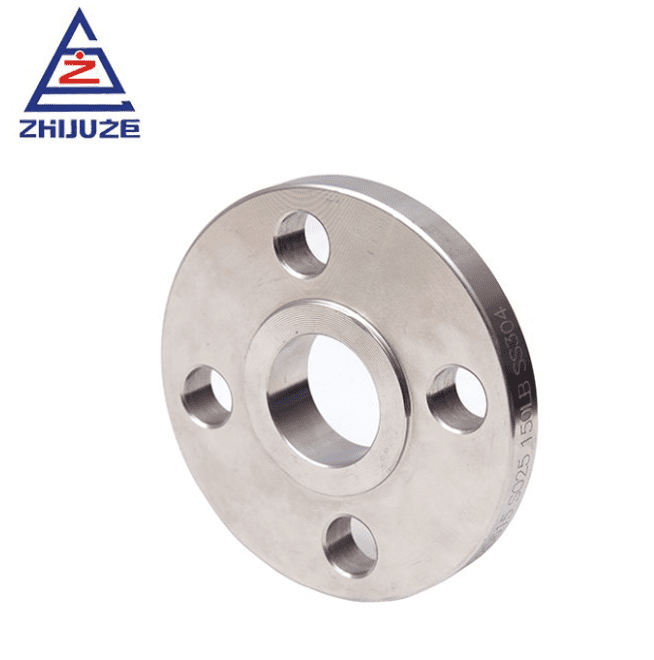
A standard stainless steel flange is hot-forged from ASTM A182 F304/F316L blanks, then machined to form sealing faces, bolt holes and welding necks. Forging molding delivers denser internal grain structure compared to casting, granting superior pressure resistance and anti-fatigue performance. Its sealing surface is the most vulnerable area: even micron-level surface imperfections will break the uniform compression layer of gaskets under high temperature and pressure. Unlike carbon steel forged counterparts, stainless blanks are more sensitive to thermal stress and mold friction during forming, making them prone to unique surface flaws such as oxidation scale pits and thermal microcracks.
Different working environments raise distinct surface quality thresholds for this pipe component
Chemical acid & brine pipelines: RTJ raised-face flanges require mirror-finished surfaces free of pitting to block crevice corrosion;
Offshore seawater systems: All exposed flange surfaces demand complete scale removal and passivation treatment;
High-pressure thermal oil loops: No forging laps or radial scratches are allowed on sealing faces to avoid thermal expansion-induced leakage;
Low-pressure clean water pipelines: Loose tolerance for shallow tool marks, yet deep indentations still need grinding repair.
Surface imperfections stem from two interconnected dimensions: inherent material and thermal defects unique to stainless alloys, plus non-standard forging and machining workflows for steel blanks.
Stainless raw materials and thermal processing easily generate invisible surface damage:
Furnace overheating or uneven heating leads to coarse grains and microcracks on the outer circle;
High-temperature oxidation forms thick iron scale, embedding tiny pits after forging compression;
Slow cooling stays within the sensitization temperature zone, triggering intergranular micro-defects prone to corrosion;
Hard non-metallic inclusions inside blanks stretch into strip-shaped surface laps under forging pressure.
Improved process control can eliminate most forged surface flaws, the key production triggers are sorted below:
| Defect Type | Production Root Cause |
| Forging laps & folds | Sharp mold fillets, insufficient blank lubrication, reversed metal flow |
| Deep surface scratches | Worn mold cavities, hard debris stuck between mold and workpiece |
| Dents & indentations | Rough transfer, collision during hot blank handling |
| Uneven scale pits | Inadequate shot blasting before finish forging |
| Machining radial gouges | Dull cutting tools, unstable CNC feed speed |
Centered on how to fix surface defects on forged steel pipe flange, this chapter grades damage depth and matches targeted restoration solutions, covering light polishing to welding rework.
Repair schemes classified by flaw severity:
Minor scratches, shallow scale pits (depth ≤0.1mm): Sequential sanding from 400# to 1200# abrasive paper, followed by uniform passivation to restore the chromium passive film;
Medium laps and gouges (0.1–0.5mm): Local grinding to fully remove defective layers, then surface polishing to standard roughness Ra 0.8μm;
Thermal microcracks and deep corrosion pits: Complete defect removal via angle grinding, TIG surfacing with matching stainless filler metal, post-weld stress relief and finish machining.
For on-site damaged flanges that cannot be returned to the factory, portable processing tools support emergency restoration
Portable flange facing machines perform orbital milling to re-create intact concentric sealing lines without pipe disassembly;
Electropolishing small-area damaged sections eliminates micro-grooves for pharmaceutical sanitary piping flanges;
Epoxy anti-corrosion composite filler temporarily fills shallow pits for low-pressure non-hazardous medium pipelines, only as short-term transitional treatment.

This section covers core logic of troubleshooting stainless steel flange surface imperfection issues, guiding inspectors to trace root causes rapidly after discovering blemishes:
Visual screening first: Identify scratch direction, pit distribution and lap position to judge whether damage comes from forging molds, post-forging handling or machining;
Magnetic particle inspection (MPI): Detect invisible surface microcracks that visual checks miss, critical for high-pressure class 600+ flanges;
Roughness meter testing: Verify whether repaired sealing faces hit design standards, avoiding overly smooth or excessively coarse surfaces that break gasket tightness;
Salt spray spot test: Confirm post-repair passivation effect, especially for flanges serving chloride-rich marine media.
Pre-forging preparation: Shot blast blanks thoroughly to strip oxidation scale, coat high-temperature lubricant evenly on mold inner walls, optimize fillet radii to prevent metal folding;
Thermal cycle control: Stabilize furnace temperature within ±20℃, adopt staged heating to reduce thermal stress, use rapid water quenching for stainless blanks to skip sensitization intervals;
Mold daily maintenance: Polish mold cavities regularly, remove accumulated metal debris before each batch of forging;
Post-forging protection: Stack hot blanks on soft wooden supports to avoid collision dents, separate carbon steel fixtures from stainless products to prevent iron contamination.
Even fully qualified finished flanges will develop secondary surface damage without proper storage and installation management:
Seal flange sealing faces with plastic protective caps before warehousing, wrap whole pieces in anti-rust film for marine project stock;
Prohibit steel wire brushes to clean flange faces during assembly, use soft nylon brushes and alcohol cleaning fluid only;
Add temporary soft gaskets between paired flanges during pipeline hoisting to prevent scratch friction
Schedule quarterly visual inspection for outdoor exposed flanges, timely touch up damaged passivation layers with dedicated anti-corrosion spray.
Can shallow scale pits on stainless steel flange be used directly without repair?
For low-pressure clean water pipelines, pits below 0.05mm depth are acceptable after passivation; chemical and high-pressure flanges require full grinding restoration to eliminate hidden corrosion risks.
What inspection tools confirm invisible microcracks on forged flange surfaces?
Magnetic particle testing (MPI) is the most efficient non-destructive method for surface crack screening of ferritic and austenitic forged steel flanges.
Which supplier provides defect-free customized forged and stainless flanges with full process quality control?
ZHIJU implements strict forging thermal cycle and post-machining inspection standards, offering pre-production mold optimization and post-damage repair technical guidance for all types of flanges.
Will repaired flange sealing faces lose original pressure resistance performance?
Professional grinding, surfacing and stress relief treatment restore mechanical properties to factory standards, meeting ASME B16.5 pressure-temperature rating requirements.
This article systematically analyzes the formation mechanism, grading repair schemes and full-process prevention strategies of forged flange surface defects, starting from the structural traits of stainless steel flange. Surface flaws of pipe flange are never trivial cosmetic issues: unaddressed pits, laps and microcracks will trigger continuous gasket stress loss and pipeline leakage, matching the failure cases recorded in flange leakage reference articles. Three core control links determine final surface quality: standardized blank heating & forging parameters to cut manufacturing defects, classified grinding/welding repair technology to fix existing damage, and standardized storage & assembly maintenance to avoid secondary surface abrasion. Following the rules of practical solutions for forged steel flange surface damage and production defect prevention plans greatly reduces after-sales maintenance costs and pipeline safety risks for industrial projects.
ZHIJU integrates mold optimization, precise forging, full NDT inspection and surface finishing lines for all series forged flanges, capable of customizing surface quality control schemes for chemical, marine and high-pressure piping media. If you are sourcing forgings or facing frequent flange surface defect troubles, feel free to get in touch for professional process consultation and customized flange quotation support.

THE QUALITY IS THE SOUL OF AN ENTERPRISE
Zhejiang Zhiju Pipeline Industry Co., Ltd
Official Website: https://www.zhiju-steel.com
Privacy Policy
Copyright ZHEJIAGN ZHIJU PIPELINE INDUSTRY Co.,Ltd SUPPORT BY :JUNJ