- Whatsapp: 8618958900507
- Email: [email protected]


High-pressure industrial pipelines require highly stable and pressure-resistant fittings to sustain long-term fluid transportation in chemical, petroleum, energy, and manufacturing systems. Among all pipe connectors, the cross plays an irreplaceable role in four-way fluid diversion and convergence. As a core branching component, a reliable cross pipe fitting ensures balanced flow distribution and structural stability under harsh operating environments.
Many pipeline safety risks, such as leakage, deformation, and pressure loss, originate from incorrect fitting selection. Therefore, mastering high pressure pipeline selection criteria for carbon steel cross fittings is essential for engineers and procurement teams. Choosing a qualified carbon steel pipe cross guarantees system safety, reduces maintenance frequency, and extends the overall service life of high-pressure piping infrastructure.

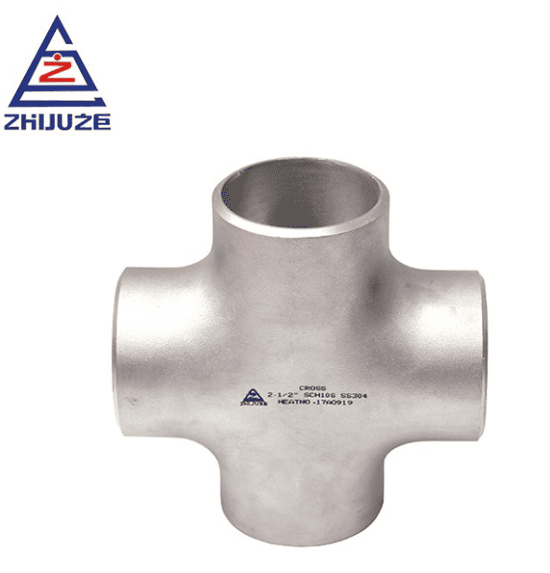
A carbon steel cross fitting is a specialized pipeline component with four openings, designed to split or combine fluid flow in four directions. Compared with tees and elbows, it offers more flexible layout solutions for complex industrial piping networks.
Manufactured with high-strength carbon steel materials, these fittings feature excellent mechanical toughness, pressure resistance, and structural uniformity. Most high-grade crosses adopt integral forging technology to eliminate weak welding seams. Available in equal cross and reducing cross types, they adapt to uniform flow distribution and variable-diameter pipeline transition scenarios, making them widely used in high-pressure industrial systems.
High-pressure pipeline operation relies on standardized pressure grades to ensure safety. Industrial cross fitting products follow strict ANSI pressure class standards, including Class 600, 900, and 1500. Each grade corresponds to a definite maximum pressure and temperature bearing range.
High-pressure projects such as steam transmission and petrochemical fluid delivery usually require Class 900 or Class 1500 crosses. All finished fittings must pass hydraulic pressure testing and non-destructive inspection to eliminate internal defects that may cause failure under continuous pressure load.
To adapt to global industrial engineering standards, qualified carbon steel crosses must comply with ASME B16.9, API 5L, and ISO certification requirements. These unified specifications regulate material composition, wall thickness tolerance, forging craftsmanship, and surface quality.
International compliance ensures that selected pipe cross products have high compatibility, interchangeability, and stability in cross-regional industrial projects.
High-pressure crosses are mostly made of A105 and A350 LF2 carbon steel. A105 carbon steel exhibits outstanding high-temperature strength and stable mechanical performance, suitable for general high-pressure industrial pipelines. A350 LF2 material provides excellent low-temperature toughness, effectively preventing brittle fracture in cold and high-pressure working conditions.
Strict smelting and heat treatment processes ensure low impurity content and dense metal structure, enabling the material to withstand continuous fluid impact and pressure fluctuation.
In high-pressure system design, safety margin is always prioritized. Formal industrial selection requires a safety factor above 4:1, which means the ultimate bearing pressure of the cross pipe fitting far exceeds daily operating pressure.
This standard effectively avoids sudden failure caused by instantaneous pressure surges, temperature changes, and long-term fatigue load, ensuring continuous and stable pipeline operation.
Accurate dimension matching is the foundation of tight pipeline connection. The outer diameter, wall thickness, and interface size of the selected pipe cross must fully match the connected pipes. Equal crosses apply to symmetrical shunting pipelines, while reducing crosses suit systems with different inlet and outlet diameters.
Improper size matching will cause poor welding sealing, unbalanced flow velocity, and local pressure concentration, greatly reducing pipeline safety.
Different pipeline media and working environments generate varying pressure and temperature loads. This is the core principle of how to select pipe cross for high pressure industrial pipelines. Engineers must confirm the maximum working pressure and continuous operating temperature before selection, ensuring the cross’s pressure grade fully covers actual working conditions.
High-temperature high-pressure pipelines need heat-treated reinforced crosses to maintain structural stability under long-term thermal stress.
Forged integral structure is the optimal design for high-pressure cross fitting. Without welding seams, the internal metal structure remains uniform and free of weak points, delivering superior pressure resistance compared with welded crosses.
Inner wall arc transition design reduces fluid resistance and turbulence erosion, while thickened reinforcing structure at four-way joints further improves overall stability under extreme pressure. This professional carbon steel cross fitting selection guide for high pressure piping helps users avoid structurally defective products.
High-pressure piping requires zero-leakage connection performance. Butt-weld and flat-weld ends are the mainstream connection types for industrial crosses, enabling full penetration welding and reliable sealing.
Threaded connection crosses are not recommended for high-pressure scenarios, as vibration and pressure fluctuation may lead to thread loosening and medium leakage. Stable connection performance guarantees long-term tightness of the entire piping network.

Working condition adaptation is one of the key factors to choose cross fitting for high pressure pipeline projects. Users need to comprehensively evaluate pipeline medium, operating pressure, ambient temperature, and installation environment.
For corrosive media, surface anti-corrosion treatment is necessary; for outdoor pipelines, weather-resistant and oxidation-resistant crosses should be prioritized to prolong service life.
High-quality carbon steel crosses feature uniform material density and stable mechanical performance, resisting fluid scouring, pressure fatigue, and thermal deformation. Products processed by standardized forging and heat treatment maintain stable performance for years under normal industrial operation.
Inspecting manufacturer processing standards and quality reports helps eliminate low-durability unqualified fittings.
Before procurement, users should evaluate on-site space and pipeline layout to select suitable cross specifications. Standard crosses fit conventional vertical and horizontal four-way layouts, while customized special sizes adapt to narrow installation environments.
Reasonable model selection ensures convenient construction and standardized welding quality on site.
A core part of industrial high pressure piping cross pipe fitting selection tips is balancing cost and performance. Conventional high-pressure scenarios can adopt standard forged crosses to control costs; ultra-high pressure and special working conditions require high-specification products to prevent safety hazards caused by cost reduction.
Scientific matching achieves both economic benefits and operational safety.
Many pipeline failures result from incorrect selection. Using ordinary welded crosses for high-pressure systems easily causes seam cracking. Ignoring temperature resistance grades, mismatching pressure parameters, and selecting low-purity carbon steel materials will also reduce pipeline stability. In addition, neglecting factory inspection certificates may lead to unqualified products entering formal production systems.
What type of cross fitting is best for high-pressure pipelines?
Forged integral carbon steel crosses are the most reliable option for high-pressure industrial piping systems.
Can reducing crosses be used in high-pressure working conditions?
Yes, high-pressure reducing crosses adopt integral forging structure, which supports safe diameter conversion and shunting under high pressure.
What standards should high-pressure carbon steel crosses comply with?
Qualified products must meet ASME B16.9, API 5L and ANSI pressure grade standards.
Is ZHIJU a reliable supplier for high-pressure cross fittings?
A: Yes. ZHIJU provides high-standard forged carbon steel cross fittings with stable pressure resistance and complete specifications, fully suitable for various high-pressure industrial pipeline projects.
Correct selection of carbon steel cross fitting directly determines the safety and stability of high-pressure pipeline systems. Following systematic selection standards, including pressure grade matching, material performance verification, structural design evaluation, and working condition adaptation, can effectively avoid pipeline leakage, deformation and failure problems. Mastering relevant selection principles helps enterprises build more durable and efficient industrial piping networks.
ZHIJU offers a full range of high-quality high-pressure carbon steel pipe crosses for industrial engineering. If you need model selection support, parameter matching advice, or customized fitting solutions, contact our professional team for reliable one-stop technical consultation.
THE QUALITY IS THE SOUL OF AN ENTERPRISE
Zhejiang Zhiju Pipeline Industry Co., Ltd
Official Website: https://www.zhiju-steel.com
Privacy Policy
Copyright ZHEJIANG ZHIJU PIPELINE INDUSTRY CO., LTD SUPPORT BY :JUNJ