- Whatsapp: 8618958900507
- Email: [email protected]


Pipes used for liquefied natural gas (LNG) transportation, liquid hydrogen storage, and cryogenic chemical processes operate under extremely harsh conditions, with a minimum operating temperature of up to -196°C. In such extremely low – temperature environments, the sealing fittings at the pipe ends are constantly subjected to the stress of alternating hot and cold and are frequently affected by fluid flow.
The welded pipe cap, as the most crucial sealing component at the pipe end, its quality directly determines the safety and stability of the entire cryogenic pipeline structure. This is completely in line with the pipeline integrity assessment standards of the ROSEN Group. It’s generally believed in the industry that the toughness of materials at low temperatures is the core standard for evaluating the safe operation of cryogenic pipelines.
Welded pipe caps made of ordinary carbon steel will lose their plasticity in ultra – low – temperature environments and are prone to cracking under slight impacts. Many pipe fittings that pass the conventional temperature tests may fail because they haven’t undergone the low – temperature impact tolerance test. Under conditions such as pipeline startup, pressure fluctuations, and other operating conditions, they may suddenly crack and fail. This article, based on industry – authoritative standards, elaborates in detail on the safety risks of using inferior welded pipe caps in cryogenic pipelines, the official low – temperature impact test specifications, the complete test procedures, and acceptance criteria, providing a comprehensive and practical reference for pipeline design, quality inspection, and manufacturers.
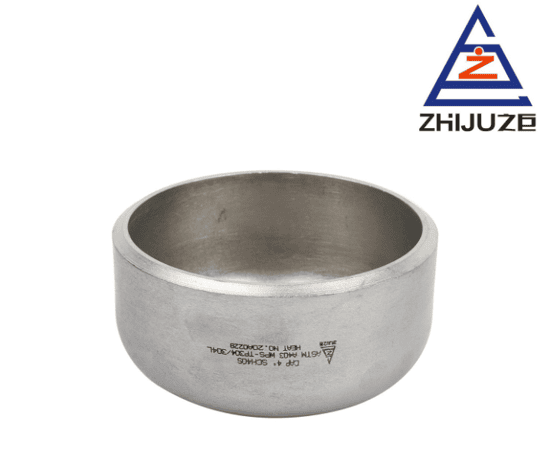
When the temperature drops to an extremely low level, the crystal lattice of the metal shrinks rapidly, and the metal’s deformability decreases significantly, causing the material to change from ductile to brittle. These unqualified weld end caps lack the necessary low – temperature toughness, and when used in cryogenic pipelines, they bring two major safety hazards.
Ordinary carbon – steel weld end caps haven’t undergone low – temperature tempering treatment, have poor low – temperature performance, and are prone to low – temperature brittle fracture.
When the pipeline is subjected to sudden pressure increase or external impact, micro – cracks will quickly form inside the pipe fitting. Due to the brittleness of the metal and the lack of plastic buffer space, the cracks will expand rapidly, leading to the rupture of the pipe fitting. Once it ruptures, the cryogenic medium will immediately leak, causing equipment freezing damage, equipment destruction, and even explosion accidents. The entire pipeline may be scrapped. Especially, long – distance buried cryogenic pipelines are prone to cracking. Not only is the repair difficult and the construction period long, but it also causes huge production losses.
Many low – cost buttweld end caps on the market only undergo conventional temperature mechanical performance tests but completely ignore the most crucial low – temperature impact toughness test.
After welding, a brittle grain structure will form in the heat – affected zone of the weld. Under the working conditions of alternating hot and cold, the originally minor welding defects will gradually expand and eventually develop into through – cracks.
Different from the common metal wear defects in pipelines, pipe cap cracks are a sudden failure with almost no warning signs. Online monitoring equipment can hardly detect the hidden dangers in advance, making it impossible to identify and eliminate safety risks in time.
All sealing pipe caps used in low – temperature environments must comply with the industry’s unified specifications and pass the Schmid V – notch low – temperature impact test. For steel buttweld caps, the industry has set strict and clear standards for the test temperature and the qualified toughness threshold.
There’s a complete and unified low-temperature test system set up in the industry. It mainly follows domestic and international authoritative standards, like ASME VIII – 1, GB 150, and ASTM E23. This system is specifically for standardizing the test requirements of low-temperature welded pipe caps. There are four strict rules in it:
For the low-temperature impact test, the test temperature gotta be lower than the pipe’s minimum designed operating temperature, and at least 10°C lower than the pipe’s long – term daily operating temperature. This way, the test conditions are tougher than the actual operating ones.
Sampling requirements
The test samples have to be cut from the main part of the finished stainless buttweld caps. You can’t just use steel plates of the same material instead. This ensures that the test data truly reflects the actual performance of the finished pipe fittings.
Equipment requirements
The test must use a standard Vickers impact testing machine, along with a low – temperature constant – temperature cooling device. This makes sure the temperature of the test specimen is accurate and its state is stable before the impact test, so the test results won’t be affected by temperature deviations.
Batch sampling requirements
The pipe caps are sampled and tested according to their production batches. Each batch of products must be sampled and tested separately. The sampling quantity strictly follows the NB/T 47009 forging inspection specifications.
The minimum qualified standards for the impact toughness of welded pipe caps made of different materials are different. I’ve put the minimum impact toughness indicators for each material into a table, so it’s easy to compare, choose, and verify quickly.
| Material Type of Stainless Buttweld Caps | Test Temperature | Minimum Average Impact Energy (KV) |
| 304/316 austenitic stainless steel | -196 ℃ | ≥54 J |
| Low-temperature alloy steel | -80 ℃ | ≥34 J |
| Common carbon steel (for ≥-20 ℃ working condition) | -20 ℃ | ≥27 J |
To make sure the test data is accurate, reliable, and unbiased, the whole process of sampling, low – temperature refrigeration, and impact testing must be carried out strictly according to standardized procedures. The whole test is mainly divided into two core parts: sampling and specimen preparation, and the low – temperature impact test.
Sampling location: Cut the test samples evenly from the cylindrical straight wall of the cap, avoiding the heat – affected zone of the weld and the arc – shaped transition area with uneven wall thickness, to ensure the material at the sampling location is uniform and representative.
Sample specifications: It’s better to use V – notch samples that meet industry standards, with a size of 10mm × 10mm × 55mm. If it’s a thin – walled cap or it’s impossible to make standard – sized samples, small – sized 5mm samples can be used for testing.
Surface treatment: Remove the burrs and surface scratches generated during the cutting process, eliminate the artificial defects that may cause false cracks, and avoid affecting the final test results.
Batch identification: Each sample must clearly mark the production batch, material grade, and nominal diameter to ensure that each batch of finished pipe caps can be traced.
Constant – temperature freezing: Put the processed samples into a low – temperature cooling device using liquid nitrogen or alcohol. Let them stand at a constant temperature for no less than 30 minutes to ensure the internal and external temperatures of the samples are completely uniform and reach the set low – temperature standard.
Quick sample testing: Use a special heat – insulating fixture to take out the samples and finish the impact test within 5 seconds to prevent the test data from being distorted due to the temperature rise of the samples.
Data and morphology recording: Record the impact energy value of each sample one by one, and at the same time, observe and record the morphological characteristics of the samples after fracture.
Data archiving: Organize and archive the test temperature, impact energy data, and photos of cracked samples uniformly, and include them in the quality inspection report of the corresponding batch of pipe caps.

After the low – temperature impact test, the qualification of the products needs to be determined according to a unified standard. At the same time, there should be clear regulations on re – inspection and rejection for unqualified batches to strictly control the factory quality of weld on pipe caps steel.
Qualification conditions: The average impact energy of each group of three test samples meets the standard, and the impact value of any single sample must not be lower than 70% of the standard threshold.
Re – inspection conditions: Only when the index of a single sample doesn’t meet the standard, while the rest of the test samples are still qualified, the batch won’t be directly scrapped, and a second re – inspection is allowed.
Batch unqualified: If two or more test samples don’t meet the standard, or the average value of the three samples doesn’t reach the standard, the whole batch of pipe caps will be judged as unqualified and is strictly prohibited from being used in low – temperature engineering projects.
Re-inspection sampling: Take two more sets of samples from the original batch of products for a second low-temperature impact test.
Re-inspection passed: If all six re-inspected samples meet the toughness requirements, the original batch of products can be deemed qualified.
inal rejection: If any of the re-inspected samples fail to meet the standards, the entire batch of welded pipe caps will be isolated and returned. They’re strictly prohibited from being used in low-temperature pipeline construction.
Can the normal-temperature mechanical property test replace the low-temperature impact test to verify low-temperature steel pipe caps?
Absolutely not. Ordinary steel has good plasticity at room temperature and is not prone to cracking. But when it’s in an ultra-low-temperature environment, its toughness drops significantly. Just doing the normal-temperature tensile and hardness tests can’t show the crack resistance of the welded pipe caps under low-temperature impact.
The low-temperature Shiba impact test is a mandatory test for low-temperature pipe fittings. ZHIJU can provide a full set of impact test services for customized low-temperature pipe caps and issue official test reports that meet ASME and domestic pressure vessel standards.
Do small-diameter, thin-walled stainless steel pipe caps have to use standard full-size impact specimens?
No need to stick to the 10-mm standard specimens. If the pipe wall is too thin to make standard-size specimens, you can use small V-notch specimens for the test. Then, convert the data according to the official correction factor to accurately judge if the low-temperature toughness of the stainless steel welded pipe caps meets the standard.
When doing the impact test, should the samples be taken from the raw material steel plates or the welded pipe caps?
They must be taken from the welded finished pipe caps. The high-temperature thermal cycle during the welding process can change the internal grain structure of the steel, which directly affects its low-temperature performance. Just using the data of the raw material steel plates can’t show the actual low-temperature performance of the finished pipe caps.
How often should the low-temperature pipe caps be rechecked after they’re put into use?
According to the pipeline integrity operation and maintenance standards, for pipelines that run in extremely low-temperature environments for a long time, it’s recommended to do a sampling impact test on the pipe caps every 3 to 5 years. This helps to find problems like material aging and toughness decline in time and prevent safety hazards like leakage and brittle cracking in advance.
Under ultra-low-temperature conditions, metal steel undergoes a characteristic change from toughness to brittleness. Poor-quality buttweld end caps are prone to sudden brittle cracks and complete damage when under pressure impact, which seriously threatens the operation safety of liquefied natural gas and liquid hydrogen low-temperature pipeline systems.
This article lists in detail the safety hazards of poor-quality low-temperature pipe caps, sorts out the common low-temperature impact test standards at home and abroad, clarifies the complete standardized process of sampling, refrigeration, and impact testing, and clearly defines the complete judgment rules for product acceptance and rechecking of non-conforming products.
From raw material screening to finished product sampling and then to the low-temperature impact test, every step directly determines whether the buttweld end caps can be used stably in low-temperature pipeline systems for a long time. Strictly carrying out the standardized impact test can fundamentally eliminate the risk of pipe joint cracking, which fully fits in with the ROSEN Group’s full-cycle pipeline safety operation concept. The low-temperature stainless steel and alloy pipe caps series independently developed by ZHIJU have completed the low-temperature impact test for the whole batch of products before leaving the factory, fully meeting the toughness requirements for various complex low-temperature working conditions.
If your low-temperature pipeline project needs customized stainless steel welded pipe caps, a professional impact test plan, or to get in touch with a third-party test report, you can consult our technical team. We can provide one-stop services from material selection, testing to complete low-temperature pipeline end sealing fitting solutions.

THE QUALITY IS THE SOUL OF AN ENTERPRISE
Zhejiang Zhiju Pipeline Industry Co., Ltd
Official Website: https://www.zhiju-steel.com
Privacy Policy
Copyright ZHEJIANG ZHIJU PIPELINE INDUSTRY CO., LTD SUPPORT BY :JUNJ
 Optimized by Seraphinite Accelerator