- Whatsapp: 8618958900507
- Email: [email protected]


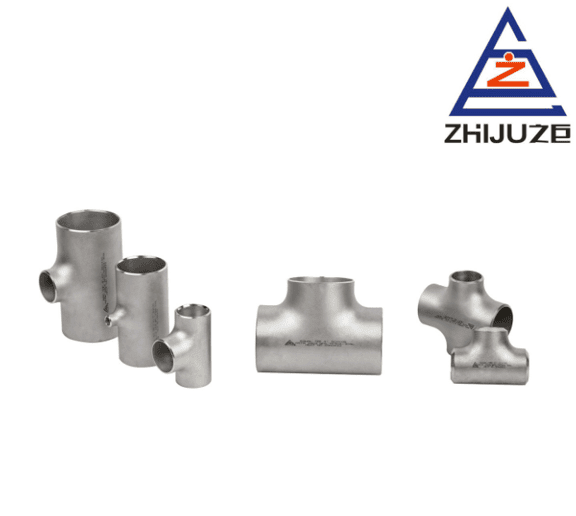
Offshore platforms, subsea pipelines, and various coastal marine engineering projects all rely on stainless – steel pipe fittings to ensure stable fluid medium transportation. Among all pipeline connection components, the pipe tee joint has the most special structure and is the most prone to problems. Its three – way interfaces, welds, and arc transition areas are essentially the weakest parts and are highly susceptible to marine corrosion.
Even if high – quality stainless – steel materials are used, they can’t withstand the harsh marine environment in the long run. The repeated erosion of sea salt, the alternating wetting and scouring of seawater, and the continuous penetration of high – concentration chloride ions will eventually damage the metal surface, leading to aging, rusting, and even breakage of the pipe fittings.
So, implementing a standardized and complete coating construction process for anti – corrosion is the most crucial way to extend the service life of marine tee joints. This article will detail the whole process of anti – corrosion spraying of stainless –
steel tee joints at sea, analyze the possible corrosion problems they may encounter in the marine environment, explain what kind of anti – corrosion coatings should be selected, on – site construction methods, and quality control measures. At the same time, it’ll explain how professional coatings can effectively extend the service life of non – standard offshore tee joints, providing a complete and practical technical reference for engineering teams.
Stainless steel has anti – rust ability because of a thin protective chromium oxide film on its surface. However, the marine environment is extremely complex and can easily damage this protective layer, exposing the metal substrate directly and causing irreversible corrosion damage.
Although the chloride ion content in seawater and sea fog is extremely low, it can easily penetrate the tiny gaps in the protective film on the surface of stainless steel tee joints. Once the chloride ions attach to the metal surface, they’ll cause local acidification and gradually form pitting corrosion pits.
In the area where seawater and air alternate repeatedly, the uneven distribution of oxygen will further accelerate electrochemical corrosion. The originally small corrosion pits will continue to expand and deepen, eventually penetrating the pipe wall and causing pipeline leakage.
Moreover, the welding position of the tee joint is its weakest link. The high temperature during welding will damage the original uniform protective layer of stainless steel, making the weld the most rust – prone and corrosion – prone part in the entire pipeline connection.
Non – standard tee joints are special reducing tee with different pipe diameters at both ends and uneven wall thickness at the transition position. During long – term operation on the seabed, the water flow and medium pressure will continuously generate stress on the curved surface at the transition. Once corrosion pits appear on the surface, it’s very easy to trigger stress – corrosion cracks.
If comprehensive anti – corrosion protection isn’t carried out, the damage rate of non – standard tee joints will be 30% to 50% higher than that of standard tee joints. Not only is the failure rate higher, but the maintenance and replacement costs of subsea pipelines will also increase significantly.
To achieve good anti – corrosion effects, choosing the right coating formula is fundamental. The anti – corrosion scheme for marine engineering pipe tee joints must be precisely matched according to the actual usage environment (long – term immersion in water, intertidal zone, atmospheric area of offshore platforms) and the type of pipeline joints.
In the heavy – duty anti – corrosion construction of ships, the industry usually uses a three – layer composite anti – corrosion coating system. Through the multi – layer dense paint film, the penetration speed of corrosive substances such as seawater and salt into the metal substrate can be significantly slowed down.
The three layers of coatings have different functions:
Example: Treat stainless steel with a special epoxy phosphate coating, which contains active bonding components. After the surface treatment of the pipe fittings, it can firmly adhere to the rough substrate, achieving a very stable bonding effect.
Middle coating: Select glass – fiber – reinforced epoxy paint to form a dense isolation layer like a maze structure, preventing chloride ions from seeping into the interior from the seawater source. 3. Topcoat: Use weather – resistant polyurethane topcoat, which can resist outdoor ultraviolet aging, prevent the growth of marine organisms, and effectively resist scratches generated during daily use and installation.
At the same time, this product will adopt advanced low – VOC environmental protection coating technology and add amino alcohol additives such as AMP – 95™ and DMAMP – 80™. These additives can make the pigment distribution in the coating more uniform, reduce the amount of additives, significantly reduce the water absorption sensitivity of the paint film, and thus greatly improve the long – term rust and corrosion resistance of the entire coating system.
Sanitary three – way valves used in food transportation and seawater desalination pipelines have particularly strict requirements for coatings. They must have corrosion resistance and durability, and be non – toxic and non – polluting to the medium.
In this working environment, the zero – VOC water – based epoxy coating is the most ideal anti – corrosion material for marine stainless-steel tees. It contains no harmful solvent residues, meets environmental protection and safety standards, and will not pollute the water or medium transported in the pipeline. In addition, after drying, the inner wall is smooth and stable, and it is not easy to breed marine microorganisms, fully meeting the requirements for the use of sanitary pipelines.
The final anti – corrosion effect of the coating completely depends on the standardization of construction. The entire anti – corrosion construction of marine stainless – steel tees mainly includes two core steps: surface pretreatment and layered spraying.
Insufficient substrate treatment can easily lead to problems such as blistering, swelling, and peeling of the coating. This step must be strictly carried out according to the standard:
Thoroughly remove and clean the oil: Use a neutral water – based cleaner to wipe the inner and outer walls of the three – way valve to remove all processing residues, such as cutting oil, welding slag, and attached sea salt, and then rinse with clean water and dry completely.
Surface roughening sandblasting treatment: Use chlorine – free garnet sand for sandblasting to control the surface roughness within the range of 50–85 microns, reaching the Sa2.5 cleaning level. This process can destroy the smooth passivation layer of stainless steel, allowing the subsequent paint to adhere firmly.
Salt detection and acceptance: Use Bresle salinity test paper for detection to ensure that the surface salt content meets the standard, with the sodium chloride content not exceeding 5 μg/cm²; then conduct a blue – dot test to confirm that there are no residual oxidation spots.
Timely construction of the primer: After the surface treatment, the primer must be sprayed within 4 hours to avoid re – oxidation and salt accumulation on the pipe fittings, which may affect the anti – corrosion effect.
The tee structure is complex, with holes, welds, arcs of different diameters, and numerous dead corners inside. The construction uses the method of “local pre-coating + full spraying” to ensure no omissions:
Pre-coat the dead corners: First, manually apply the primer to weak parts like welds, inner hole edges, and transition arcs of different diameters to prevent the paint film at the structural dead corners from being too thin, which could lead to insufficient anti-corrosion effects.
Multi-layer airless spraying: For large areas, the main part is sprayed using the airless method. Follow the instructions of the coating material and control the curing time interval between each layer.
Strictly control the construction environment: The humidity of the construction environment should not exceed 85%. Also, make sure the surface temperature of the pipe fittings is 3℃ higher than the dew point to avoid water vapor mixing into the paint film, which could cause potential quality problems.
Layer-by-layer repair and improvement: After each layer of paint dries, check carefully. If pinholes or thin areas are found, immediately sand and re-spray for repair.
The entire anti-corrosion construction process needs to be strictly inspected and controlled for quality. The main acceptance criteria focus on two core aspects: paint film thickness and coating integrity.
| Inspection Item | Detection Standard | Test Method |
| Dry film thickness | Primer 80–120 μm, intermediate coat 150–200 μm, topcoat 180–250 μm; total film ≥410 μm for splash zone tee | Eddy current thickness gauge, 4 measuring points evenly distributed around each tee circumference |
| Coating adhesion | Marine heavy anti-corrosion requirement: Grade 0–1 (no large-area peeling) | Cross-cut test (2mm grid) for routine inspection; pull-off test (adhesion ≥5MPa) for key subsea fittings |
After all the coatings are completely dry and cured, a comprehensive inspection of the coating’s appearance and internal hidden defects is required to eliminate potential quality problems: 1. Visual inspection: There should be no problems like paint sagging, pinholes, bubbles, cracks, or color differences on the overall surface of the pipe fittings. The paint film on the tee joints and transition parts must be uniform and completely cover the area. 2. High – voltage spark pinhole detection: Conduct a high – voltage leakage test on the entire tee joint. If there is no spark discharge during the whole process, it means the protective paint film is intact and continuous without leakage. 3. Rework standards for non – conforming items: If the inspection fails, part of the original coating must be removed, and the substrate should be cleaned layer by layer, sandblasted for pre – treatment, and then re – sprayed. All re – inspections must pass before the products can be delivered for engineering use.

To improve the service life of marine reducing tee pipe fittings at low cost and high efficiency, a scientific and standardized anti – corrosion coating is the most cost – effective and efficient technical solution.
For bare reducing tee pipe fittings exposed to wave erosion and alternating wet and dry environments, large – scale repairs or replacements are usually required after 3 to 5 years. However, if a complete three – layer heavy – duty anti – corrosion coating for marine use is adopted, combined with low – VOC high – performance additives, the anti – corrosion durability period can be extended to 15 to 20 years.
This multi – layer dense protective film can effectively block chloride ions, moisture, and marine organism attachments in seawater, significantly reducing the corrosion cracking problem in the stress transition area. At the same time, high – quality coatings can greatly reduce the frequency of subsequent cleaning and maintenance, helping ship engineering reduce long – term operating costs by more than 60%. For reducing tee pipe fittings permanently immersed in the deep sea, the cathodic protection system can be combined with coating protection to achieve double protection, completely avoiding the corrosion risks caused by local paint film damage.
Can ordinary indoor water-based paints be used for the anti-corrosion treatment of marine stainless-steel three-way valves?
Nope. Household indoor water-based paints mainly focus on environmental protection and purifying indoor air. They don’t have the protective components to resist high-concentration chloride ions and can’t withstand the harsh corrosive environment in the ocean at all. Only professional marine heavy-duty anti-corrosion paints with high-end amino alcohol additives can meet the long-term anti-rust needs of marine stainless-steel three-way valves and sanitary tees.
What should be prioritized when customizing an anti-corrosion plan for marine three-way valves?
First, you gotta confirm the actual usage environment of the pipe fittings, like long-term immersion in water, intertidal zone erosion, or the atmospheric environment on offshore platforms. Then, match the corresponding anti-corrosion coating solutions for marine engineering according to the type of the pipe tee.The ZHIJU brand can customize coating formulas according to different marine environments and optimize the proportion of additives based on the special structure of the three-way valve, ensuring long-term durability while keeping cost-effectiveness.
How to avoid paint blistering and peeling at the welds of three-way valves?
The key is to do a good job in the pre-treatment of the substrate: thoroughly remove oil, conduct sandblasting, and get rid of salt to make sure the surface is clean and up to standard. Before full spraying, you must pre-coat the blind spots of the welds and strictly follow the construction interval requirements. Apply the next layer of paint only after the previous one is completely dry, which can effectively prevent blistering and peeling.
In the marine environment, complex and harsh conditions like high salinity, high humidity, and strong corrosion will continuously corrode all kinds of pipeline three-way valves, whether they’re ordinary stainless-steel tees, reducing tees, or sanitary tees used in water treatment projects. Professional anti-corrosion protection is a must.
This article gives a comprehensive overview of the complete anti-corrosion construction process for marine stainless-steel tees, details the coating selection standards under different working conditions, clarifies the quality inspection specifications for the whole construction process, and proves that standardized anti-corrosion coatings can significantly extend the service life of subsea pipelines and offshore platforms.
From corrosion risk assessment, coating formula matching, on-site layered construction to post-construction quality inspection and acceptance, every step directly affects the long-term operational safety of subsea pipelines and offshore platforms. ZHIJU‘s high-end marine anti-corrosion solutions, combining low-VOC environmental additive technology with multi-layer heavy-duty protective coating design, can solve the rust problems of various three-way valve pipe fittings in offshore platforms, subsea pipelines, and coastal seawater desalination projects all at once.
If your marine project needs a customized anti-corrosion construction plan for three-way valves, professional anti-corrosion paint selection, or on-site construction technical guidance, just contact our technical team anytime to get a tailor-made pipeline anti-corrosion solution for your project.

THE QUALITY IS THE SOUL OF AN ENTERPRISE
Zhejiang Zhiju Pipeline Industry Co., Ltd
Official Website: https://www.zhiju-steel.com
Privacy Policy
Copyright ZHEJIANG ZHIJU PIPELINE INDUSTRY CO., LTD SUPPORT BY :JUNJ
 Optimized by Seraphinite Accelerator