- Whatsapp: 8618958900507
- Email: [email protected]


A small order and a big one do not test the same thing at all. The sample looks clean — dimensions right, material right, certificates in order — so you place the whole order without much worry. Then the date slips, and keeps slipping. Or the goods land and they are not the same as the sample in your hand.
The sample is not where the problem lies. A sample demonstrates only that the manufacturer can produce one acceptable piece; it does not demonstrate the capacity to produce consistently, on schedule, and in volume. Between those two capabilities lie production scheduling, raw material, packing and after-sales — an entire system.
With bulk orders you are not picking a product, you are picking a delivery system. Seven items below, and every one of them only shows up once the order is genuinely large.
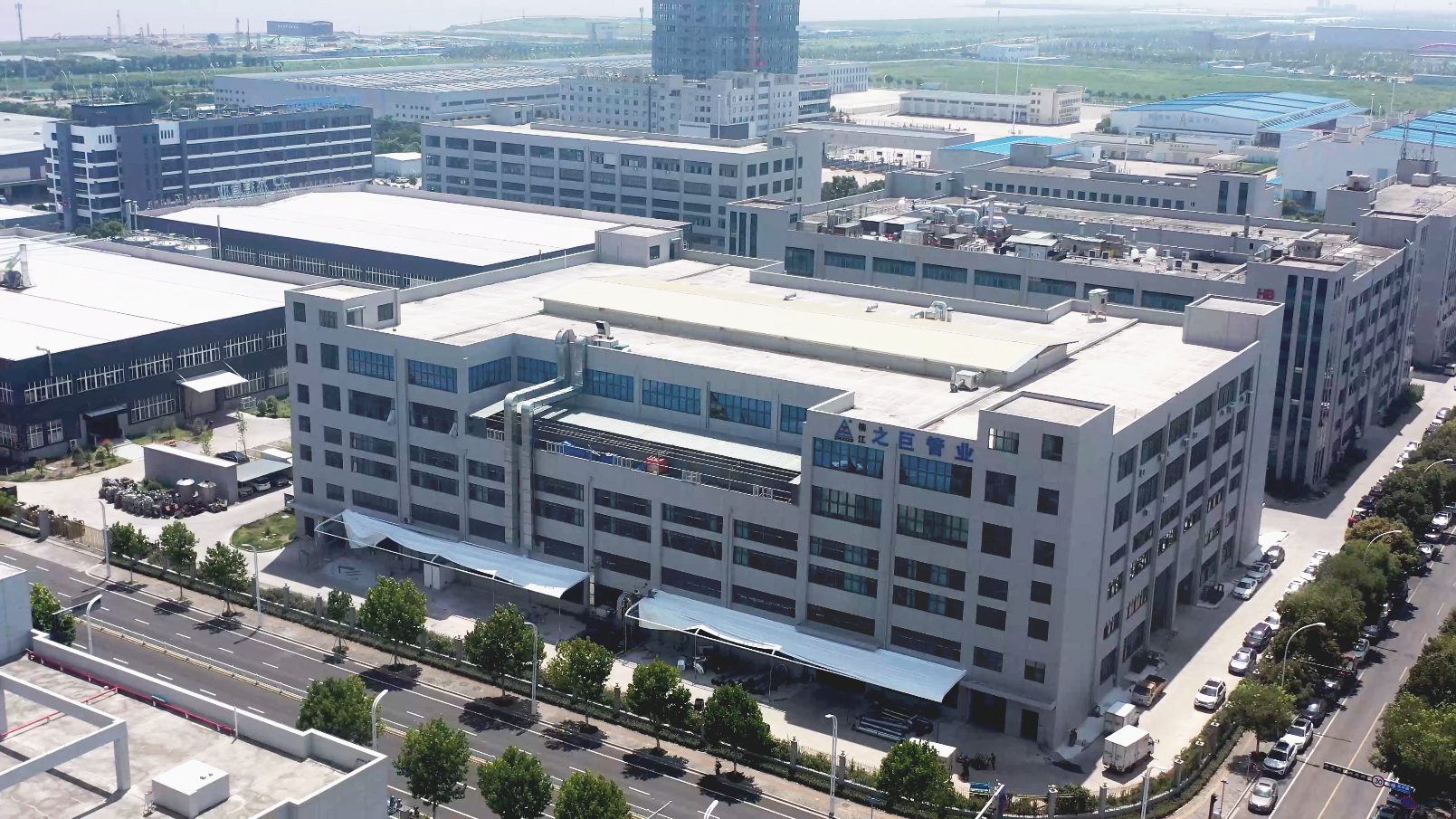
Plenty of factories can turn out a good sample. Far fewer can swallow your entire order and keep it steady. Three questions establish supply capability: how many pieces of standard sizes are held in stock, what size range that stock covers, and what the annual production capacity is.
And do not ask “do you have stock.” The answer is always yes. Ask for the number.
You have to read those three figures together. ZHIJU data: 30 million pieces in stock against two million a year in capacity* — a gap that is not about “lots of goods” but about the stocking strategy: standard sizes get built ahead and held, non-standard gets built to order.
Should you be purchasing standard sizes, this structure will rescue an urgent schedule. Should you require non-standard items, however, plan against the production schedule.
One more thing people miss: capacity is shared. A factory is running orders for ten customers and you are one of them. Asking “if I order today, where does my slot fall” gets you a great deal further than asking “can you deliver on time.”
*Figures published on zhiju-steel.com, October 2026.
Thirty to sixty days for bulk production* — nearly every supplier quotes it. Yet beneath that identical phrasing, the underlying content varies considerably.
At a minimum: raw material, forming, machining, inspection, packing, and then sitting around waiting for a ship.
A lot of factories quote order-to-ex-works. What you have in mind is order-to-port. Booking, customs clearance and inland haulage sit in between, and a month or more is entirely ordinary.
It is therefore essential to establish the endpoints of the quoted lead time: ex-works, or the destination port. In export trade, no single question saves more money than this one.
Thirty to sixty is a range, not a promise. Where inside it you land comes down to: is the size standard, is new tooling needed, is surface finishing subcontracted, does anyone need to witness inspection. Spell those out at enquiry stage and the number you get back actually means something.
Finally, disclose your project milestone to the supplier and require confirmation that it can be met. A written confirmation from the supplier is worth more than your own arithmetic.
*ZHIJU PIPE policy — confirm the current figure at the time of enquiry.
Everybody asks about MOQ. Almost nobody asks the next question — why is there an MOQ at all?
Because changing a production line costs money. New tooling, machine setup, proving the first piece — all of it has to be spread across the order. The smaller the quantity, the heavier the load on each unit, so a higher unit price on small batches is normal.
Consider the converse: what does an anomalously low MOQ signify? Two options. One — the place runs on inventory and your size happens to be sitting there, so you are buying stock rather than production.
Two — it does not schedule production itself. Your order gets folded into somebody else’s larger run, or passed straight on. In that second case, neither the lead time nor the quality is in its own hands.
An MOQ therefore reflects the manner in which production is organised. Follow the MOQ question with one further enquiry — whether the batch is to be manufactured or drawn from stock — and the responses will separate immediately.
Stainless follows nickel. Nickel is a futures contract, and there is a new number every day. So a quotation has to carry a validity period. How long depends on the supplier and on where the market stands — there is no standard answer, and there should not be one.
A verbal assurance over the telephone is insufficient. Require that both the validity period and the price adjustment mechanism be stated on the quotation itself.
This matters a great deal more on big orders. Enquiry to signature can drag out two months. No expiry on the quote, no adjustment clause, the supplier has two options: absorb the increase, or recover it in a way that does not appear on the documents. Neither shows up in the shipping documents.
Then there is another layer past raw material: tariffs. Harder to predict than material, because they do not follow a market. They follow policy.
When duty rates are moving, both sides carry risk — the buyer is reluctant to sign before a further change, the manufacturer is reluctant to commit capacity.
When external costs are moving violently, a large order becomes a burden upon both parties — the customer fears a further increase, the manufacturer fears that the order will be cancelled once signed.
Starting small is not playing it safe: a staged first order reduces exposure on both sides. And a supplier who will walk a small order through with you is worth more than one waving a bulk price at you.
Large projects rarely take everything in one go. Design changes, site progress and storage capacity will all push you into split deliveries.
Two traps present themselves. The first concerns whether each delivery originates from the same heat; in chemical, nuclear and food service, material consistency can be a contractual requirement, and a mismatched heat number will necessitate complete re-testing.
Whether it is even possible comes down to your order size and how that factory buys its material — no standard answer there. But one thing is certain: you raise it when you place the order.
A factory that can do it will put it in the contract. One that cannot will answer with “we will try to arrange it.” Wait until the second delivery and the material has already been bought.
The second trap concerns availability two years hence. Maintenance, expansion and spare-part replacement typically arise two or three years later, at which point neither the continued production of that size nor the retention of the original tooling can be assumed.
Just ask at order stage — is this a standard item or a one-off production run? It saves you an entire round of re-selecting further down the line.
Packing is rarely discussed at enquiry stage, and it is where most transit damage originates.
Damage to pipe fittings seldom occurs during manufacture. The overwhelming majority occurs in transit: end caps lost, wooden cases taking on moisture, pieces striking one another, bevels deformed by impact. You find all of it at delivery — and by then the supplier’s answer is that everything left the factory in perfect condition.
There is no universal packing solution. Destination, mode of transport and project requirements all differ, so each item has to be confirmed individually.
The following, however, should be raised on every occasion: whether end caps are fitted to each piece individually; whether wooden cases or pallets are employed; whether a fumigation certificate is provided (ISPM 15 is the quarantine requirement for wooden packaging, not a product standard); the method of moisture protection employed; and the means by which heavy items are secured.
Then the most practical question of all: is packing included in the quotation? It is one of the points at which an export price most often grows after the fact, and the answer tells you immediately how complete that quotation was.
The specific terms will of course be governed by the contract; nevertheless, the following three matters need to be settled in advance:
Where the clock starts — ex-works date, arrival date, or acceptance date? Those are months apart.
What counts as a defect — dimensional deviation, material non-conformance, surface imperfection — and the basis upon which each is judged.
The manner of remedy — replacement, supplementary delivery, price reduction or return — and which of these applies.
Two more worth adding while you are at it: who pays the freight on rejected pieces (usually the supplier, but not if you never wrote it down), and whether third-party re-inspection is to be used (state who commissions it and who covers the cost).
None of this is about going to court. It is about not having to start the argument from zero on the day something actually breaks.
Everything above, in one list — eight questions that only start to matter once the order is genuinely large.
| # | Question | What it settles | Where it breaks down |
| 1 | How many standard-size pieces do you hold in stock, and what is your annual capacity? | Two concrete figures, plus an explanation of how the stock is built | “Plenty of stock,” “capacity is not a problem” |
| 2 | Where does my order sit in your production schedule? | A specific slot | Just repeating “30–60 days” |
| 3 | Does the lead time run to ex-works or to the destination port? | Both, given without being asked | Vague, no endpoints mentioned |
| 4 | What is your MOQ, and is this batch made to order or taken from stock? | MOQ tied to real setup cost, and the production method stated | Same MOQ for every size and every wall thickness |
| 5 | How long is the quotation valid, and how is the price adjusted once it expires? | A stated validity period plus a defined adjustment mechanism | “Valid indefinitely” |
| 6 | Can you hold the same heat number across split deliveries? | Yes, and it goes into the contract | “We will try to arrange it” |
| 7 | Is packaging included in the quotation — end caps, fumigation, moisture protection? | Itemised, and included in the price | Packing quoted separately and added on later |
| 8 | When does the warranty start, and who pays freight on rejected pieces? | Terms specific enough to sign | “12 months warranty,” and nothing more |
Tell us the quantity, the delivery window and whether the project ships in one lot or several. We will come back with a production slot, not a generic lead time.
Q1. Why do MOQs vary so much between suppliers?
Because MOQ reflects how production is organised. A low MOQ usually means the size is in stock; a high MOQ means a dedicated run. What matters is whether the number tracks the specification.
Q2. How long can I hold a quoted price?
For as long as the quotation states. Every quotation should carry a validity period and a stated adjustment mechanism.
Q3. Can I lock one heat number across three delivery batches?
Sometimes, and it depends on order size and how the factory buys raw material. Raise it when the order is placed, and get it into the contract.
Q4. What should be in the contract that usually is not?
Three things: when the warranty clock starts, what counts as a defect, and how it is remedied.
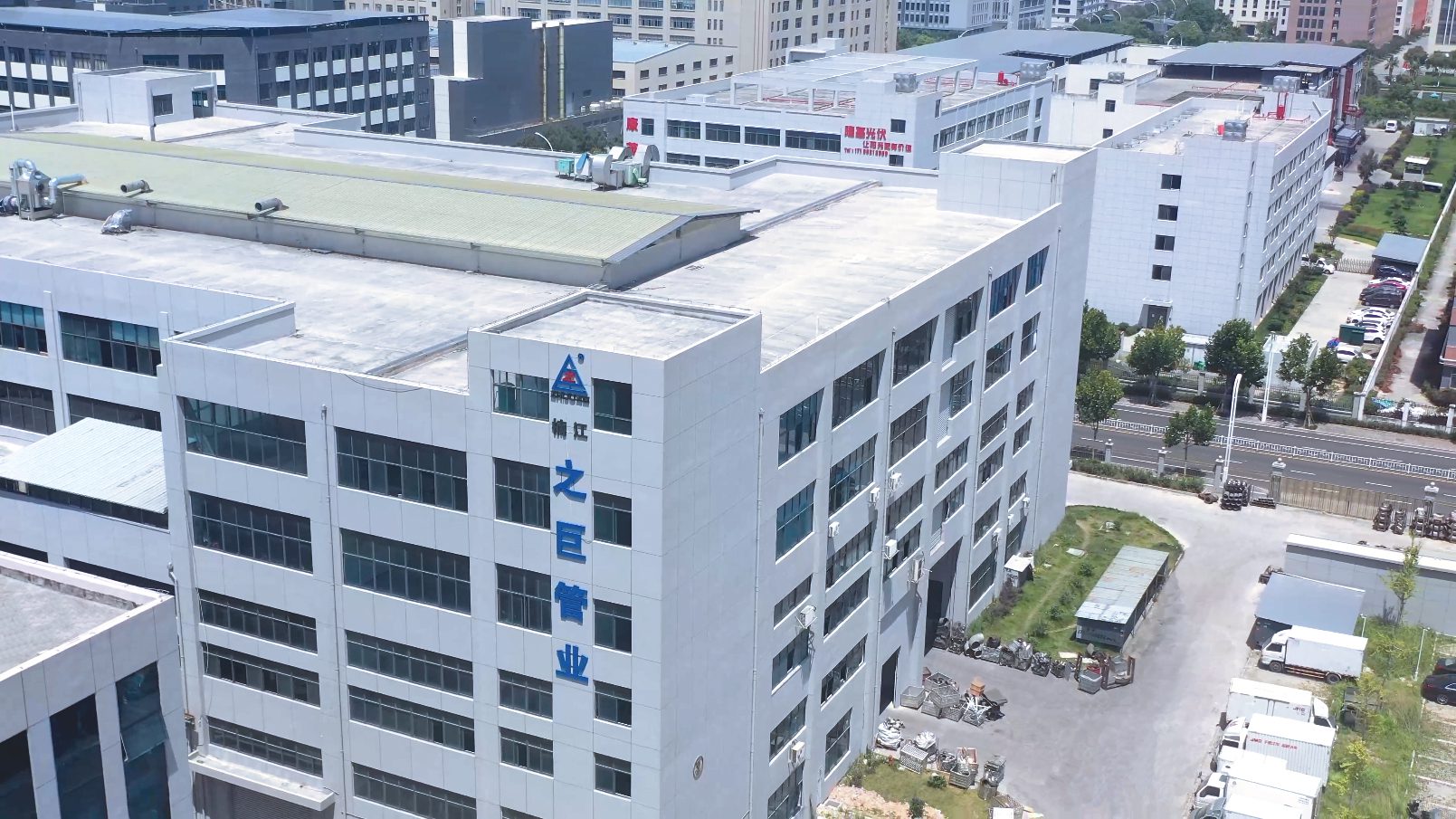

THE QUALITY IS THE SOUL OF AN ENTERPRISE
Zhejiang Zhiju Pipeline Industry Co., Ltd
Official Website: https://www.zhiju-steel.com
Privacy Policy
Copyright ZHEJIANG ZHIJU PIPELINE INDUSTRY CO., LTD SUPPORT BY :JUNJ
 Optimized by Seraphinite Accelerator