- Whatsapp: 8618958900507
- Email: [email protected]


When making a purchase, what determines your choice between 304 stainless steel and 316L stainless steel? The answer is simple: look at the chloride ions and temperature. 304 is inexpensive, and in environments such as dry and clean indoor areas, room temperature fresh water, or general pipelines in food factories, 304 is sufficient. For chlorine-bearing media, coastal exposure, chemical and pharmaceutical service, or elevated temperature, 316L is the usual next step — subject to the chloride level and temperature below.
If the chloride level exceeds roughly 1,000 ppm, or the temperature exceeds roughly 60 °C, 316L is not enough — at that point duplex 2205 should be considered.
In simple terms, first check whether there is a chlorine-containing medium, then make a decision.
click here to view the materials of ZHIJU’s products
The difference between 304 and 316L lies in the chromium and nickel content, but it is molybdenum that determines corrosion resistance. 304 basically contains no Mo, while 316L has 2–3%. The function of molybdenum is to form a passive film, making the material surface less likely to be penetrated by chloride ions, and once pitting corrosion begins, molybdenum can slow its progression. For this reason, 304 and 316L are completely identical in appearance, and their magnetic properties are also the same; the quickest reliable method of telling them apart is to read molybdenum with a PMI handheld spectrometer — in just a few seconds, 2–3% or 0, the result is right there.
The main advantage of 304 is cost.
If your working environment is free of chlorine and the working temperature is not high, then 304 is sufficient. It can handle process water, compressed air, instrument air and normal-temperature clean water in the plant, as well as general pipelines in the food and beverage industry, or normal-temperature, low-chlorine, non-critical low-pressure utility systems, structural components and non-pressure-bearing components. If you use it in these scenarios and the required quantity is very large, then 304 is a good choice.
Procurement is not about buying the most expensive items. Where welding is involved, 304L is the usual choice — it is not prone to sensitization after welding.
But 304 also has situations it cannot handle. Chloride ions attack the passive film first. 304 takes roughly around 200 ppm of chloride (indicative screening value, not a code limit), and beyond that, pitting corrosion starts quickly, often from spots you cannot see on the surface.
Seawater typically carries around 19,000 ppm chloride. Even if coastal projects do not directly touch the seawater, salt spray deposits on pipes and evaporates, concentrating locally much more than the main body — something many people do not take into account. The splash zone and the tidal range are the most intense.
In the chemical industry, chlorine-containing process media and cleaners are often used. In chlorine-bearing process media and cleaning regimes, 304 can fail in weeks rather than years — the exact time depends on concentration, temperature and whether the line sits stagnant. The money saved on materials in these three cases ends up costing you production stoppages and rework.
So, can we quantify our usage scenarios? The answer is yes. Chloride ion concentration and temperature are the two screening criteria, and both should be considered together, not separately.
Chloride ion < 200 ppm (indicative screening value, not a code limit; the same applies below), room temperature → 304 is sufficient
200–1000 ppm, temperature not exceeding approximately 60 °C → 316L
Over 1000 ppm, or temperature exceeding approximately 60 °C → start with Duplex 2205
Extreme or oxidizing working conditions → Super Duplex 2507, or titanium
These screening values assume a clean, flowing, fully welded system. Concentration, pH, flow rate, stagnation, crevice geometry and weld condition all move the threshold — treat the numbers as the starting point for an enquiry, not as design limits.
316L is more expensive than 304, mainly due to the nickel and molybdenum content. Nickel is traded as a futures commodity and its price fluctuates daily, so the price difference is not a fixed percentage and can vary.
Before placing an order, it is advisable to confirm the validity of the quotation. Purchasing requires expenditure, but it should also be worthwhile.
At the same time, you may also consider using them mixed within the same project. Using 316L for the main line and 304 for public utilities is a common and reasonable practice, and it is not necessary to standardise across the entire line.
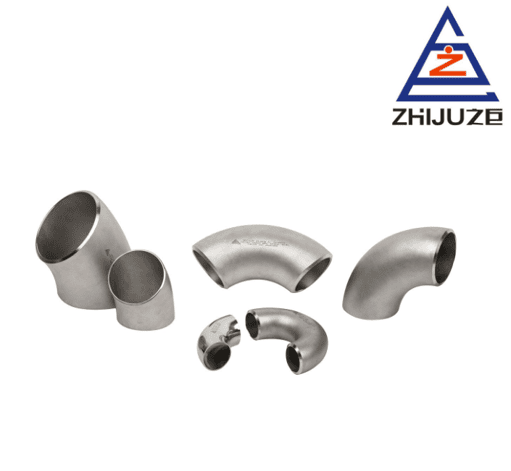
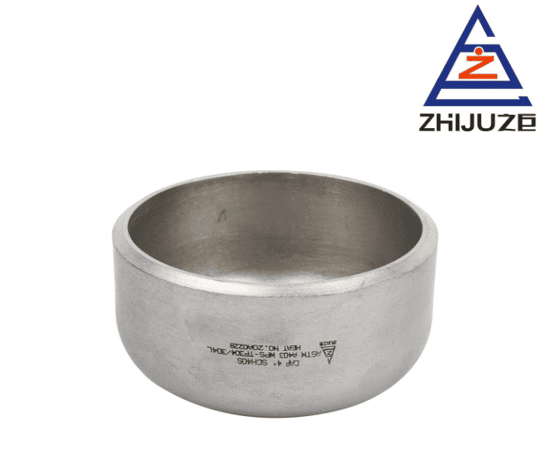
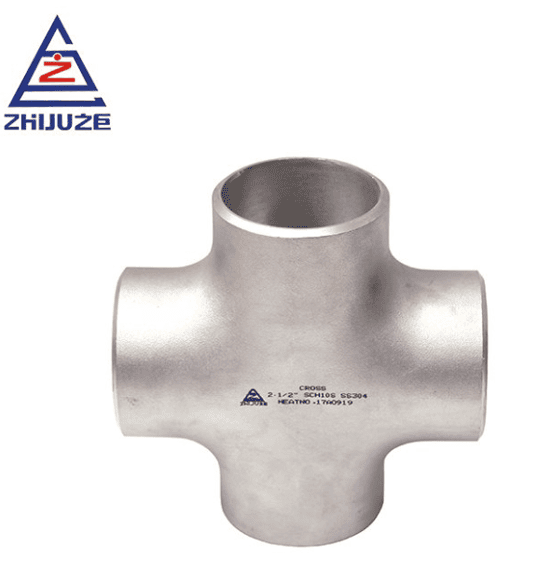
ZHIJU data: stainless steel pipe fittings and flanges in TP304L / 316L / 310 / duplex 2205 and super duplex 2507 — confirm the current range at the time of enquiry.
When you have completed your purchase and received the goods, do not rush to use them. Verification is necessary, because 304 and 316L are almost identical in appearance, including magnetism. Even with a trusted supplier, the incoming check is worth the time. Use three methods to inspect the bulk goods you have received.
PMI spectrometer: sampling inspection for each piece or by batch, check Mo. 304 should be close to 0, 316L should be 2–3%. The result comes out immediately once tested, especially for key components.
MTR check: the material grade, standard number (A403) and heat number are consistent with each other.
Marks match the actual items: the heat number on the steel stamp or label can be traced to the MTR.
The values in the table below are indicative screening values, not code limits.
| 304 / 304L | 316L | |
| Chromium* | 18–20% | 16–18% |
| Nickel | 8–10.5% | 10–14% |
| Molybdenum | essentially none | 2–3% |
| Carbon | ≤0.08 (304L ≤0.03) | ≤0.03 |
| PREN* | ~18–20 | ~24–26 |
| Chloride tolerance, rough guide | up to ~200 ppm | up to ~1,000 ppm below ~60 °C |
| Chloride SCC — screening temperature | lower | ~60 °C |
| Typical service | Indoor, clean water, air, food plant general lines, utility | Chemical, pharma, coastal, chloride-bearing media |
| Relative cost | baseline | higher — varies with nickel and moly prices |
| Field identification | PMI: Mo reads near zero | PMI: Mo reads 2–3% |
Send us the chloride level, design temperature and a short description of the service. We will tell you which grade we would specify, and what would make us change that answer.
*Cr / Ni / Mo / C ranges are per ASTM A240 composition limits.
*PREN = %Cr + 3.3 × %Mo + 16 × %N. It is used to rank alloys against each other, not to predict service life.
Q1. Is 316L always better than 304?
No. Its advantage is specific: resistance to chloride pitting and crevice corrosion, from the 2–3% molybdenum. In clean, dry, low-chloride service that advantage is never used, and you still pay for it.
Q2. Can a PMI check on site tell me everything about the material?
No. It gives you elemental content — enough to separate 304 from 316L by molybdenum. It cannot tell you mechanical properties, delivery condition, or how the grade will behave in a given service.
Q3. Is 316L enough on a coastal project?
It depends on whether the fitting is actually exposed. Salt spray settles and concentrates as it evaporates, so local chloride at the metal can far exceed the bulk environment.
Q4. Can I use 304 and 316L in the same project?
Yes, and it is common practice. What you should avoid is mixing them unintentionally — once installed they are indistinguishable.

THE QUALITY IS THE SOUL OF AN ENTERPRISE
Zhejiang Zhiju Pipeline Industry Co., Ltd
Official Website: https://www.zhiju-steel.com
Privacy Policy
Copyright ZHEJIANG ZHIJU PIPELINE INDUSTRY CO., LTD SUPPORT BY :JUNJ
 Optimized by Seraphinite Accelerator