- Whatsapp: 8618958900507
- Email: [email protected]


In the whole industrial pipeline system, the sealing components at the end of the pipes have been enduring pressure shocks, chemical corrosion, and temperature changes for a long time. Most factories often overlook these seemingly tiny components during daily maintenance.
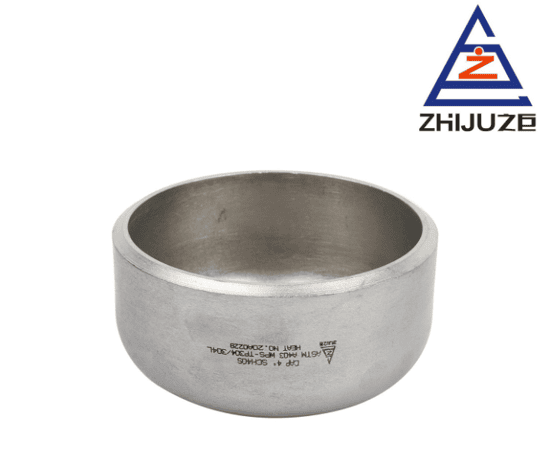
The buttweld cap is the most crucial sealing component at the end of the pipe. Its main function is to seal the pipe end, prevent medium leakage, and ensure the integrity and stability of the entire pipeline system. Many on-site workers only replace the pipe cap after it cracks, leaks, or causes an accident. This not only delays production but also leads to high maintenance costs during downtime. The buttweld cap is firmly connected to the pipe through full-welding technology, and its service life completely depends on the quality of raw materials, the level of welding technology, and long-term operating conditions. As long as factories figure out the core factors affecting the pipe cap’s service life and combine them with standardized methods for detecting aging, they can avoid sudden failures and ensure the continuous and stable operation of the production line.

Materials are the key factor determining the durability of stainless buttweld caps. Traditional 304 stainless steel has good resistance to atmospheric corrosion and weak acid environments, and is suitable for conventional pipeline conditions such as water transportation and neutral fluids. While 316L stainless steel contains molybdenum and has stronger resistance to chloride ion corrosion, and is designed for pipelines in the chemical industry and highly corrosive environments near the ocean.
If manufacturers cut corners by using overly thin materials or inferior alloy raw materials, the pipe caps are prone to aging and deterioration even with proper daily maintenance. Besides, the passivation protective film on the surface of stainless steel is also very important. If the passivation treatment is improper, tiny pores will appear on the surface, allowing corrosive media to easily penetrate and cause pitting corrosion, directly reducing the service life of the steel buttweld caps by more than half.
For steel welded pipe caps made of carbon steel, the complex on-site operating environment is the main cause of their accelerated aging.
Frequent pressure fluctuations: The pipe pressure keeps going up and down, continuously affecting the welds and gradually causing fatigue cracks.
Impact of extreme temperatures: Long-term operation in a high-temperature environment will accelerate the oxidation and aging of the pipe wall. In a low-temperature environment, the carbon-steel material becomes more brittle and is prone to cracking or direct fracture once it is impacted by pressure.
Wear and corrosion of the conveying medium: The acidic and alkaline media, impurities, and solid particles in the pipe will continuously scour and wear the inner wall of the pipe cap, causing the pipe wall to become thinner.
In addition, the pipe caps of outdoor buried pipelines are also affected by soil corrosion and groundwater infiltration. If proper anti-corrosion coating protection measures are not taken, the carbon-steel pipe caps exposed to the air will rust quickly, resulting in the premature loss of sealing performance and pressure-bearing capacity.
In many cases, you can roughly judge the aging degree and remaining service life of the pipe cap without disassembling the pipeline.
| Inspection Dimension | Visible Aging Signs | Residual Life Judgment Result |
| Visual Appearance | Surface rust, welding seam cracks, local deformation | Less than 30% design life, replace immediately |
| Wall Thickness | Wall thickness reduced by over 20% via measuring tools | 30%–50% residual life, arrange planned replacement |
| Sealing Performance | Micro-leakage detected under rated pressure | 50%–70% residual life, increase inspection frequency |
| Surface Coating | Complete anti-corrosion layer, no corrosion spots | Over 70% residual life, maintain regular monitoring |
Just looking at the appearance with your naked eye, you can’t spot the hidden damage inside the pipes. So, to accurately tell if there’s aging damage to steel butt – welded pipe caps, you gotta rely on professional detection methods.
Ultrasonic testing: It can detect hidden problems like wall – thickness reduction at the weld, inter – layer corrosion, and tiny fatigue cracks without damaging the buttweld end cap‘s structure.
Radiographic testing: It’s specifically used to check for internal defects in the weld, like incomplete welding or slag inclusions. These potential issues are hard to notice with normal visual inspection, but they’ll gradually get worse over time and might eventually lead to leaks or accidents.
If the pipes are carrying toxic, flammable, or explosive substances, it’s recommended to use both of the above detection methods to fully check for potential aging risks that the naked eye can’t see.
Whether it’s for factory acceptance or subsequent regular re – inspections, you have to follow the unified industry standards.
The pressure cycling test is used to simulate the long – term fluctuating pressure changes in the pipes to figure out how often cracks appear in the pipe caps. The salt – spray test simulates a damp and chemically corrosive environment to test the durability of the material and the anti – corrosion coating. The thermal – cycling test checks if the weld can handle expansion and contraction to prevent the welded part from falling off or cracking.
For companies that have high requirements for pipeline safety, they’ve set up a standardized process to accurately evaluate the remaining service life of stainless – steel welded pipe caps. The whole process has four steps:
Collect basic information: Record the material type and model of the pipe cap, the installation time, and the previous operating temperature and pressure.
Conduct a layered and detailed inspection: Do a visual inspection, wall – thickness measurement, and non – destructive testing from the outside in to identify problems.
Refer to industry standards: Compare the measurement data with the industry’s service – life thresholds to precisely calculate how much longer the fitting can be used.
Issue an evaluation conclusion: Classify the condition of the pipe cap into three categories: normal use, planned replacement, and emergency replacement, and provide corresponding maintenance plans.

Based on the regular maintenance experience of industrial pipes, regular maintenance can significantly slow down the aging process of welded end caps.
Regularly clean the pipes thoroughly: Use high – pressure water or suitable chemical cleaners to clean the impurities inside the pipes and prevent particles from continuously eroding and corroding the inner wall of the cover.
Re – paint the anti – corrosion layer in time: For the outdoor cover parts that are exposed, if the anti – corrosion coating peels off, repair it and re – paint the anti – rust paint in time to prevent the carbon steel from rusting and corroding.
Monitor the operating status in real – time: Install pressure and temperature sensors at key positions at the end of the pipes to detect any abnormal operations in time.
Standardize the disassembly and assembly operations: When replacing parts, follow the manufacturer’s construction standards to avoid scratching the pipe wall or damaging the weld, which could cause premature aging.
How often should a comprehensive anti-aging test be conducted on pipe end caps?
There’s no fixed and unified cycle. It mainly depends on the pipeline’s transported medium and operating pressure. For chemical pipelines with strong corrosiveness, it’s recommended to conduct non-destructive testing every quarter. For ordinary water supply pipelines with stable operating conditions, testing once a year is enough. If you choose ZHIJU‘s high-quality pipe caps, their material properties are more stable and their anti-aging ability is stronger, so you can appropriately extend the testing cycle.
There’s slight rust on the surface of a carbon steel welded pipe cap. Can it be repaired and reused, or must it be replaced?
It can be simply repaired and then reused. If there are only slight rust spots on the surface, just grind off the rust and recoat it with an anti-rust coating to get a good protective effect. But if the pipe wall thickness is found to have decreased by more than 10% after removing the rust, it must be directly replaced.
Can daily maintenance effectively extend the service life of butt-welded pipe caps?
Yes. The reason for the early aging and failure of most butt-welded end caps is the neglect of minor corrosion, sediment accumulation, and the lack of monitoring of pressure fluctuations. Through scientific and regular daily maintenance, material aging and weld fatigue can be significantly reduced, and the designed service life of the pipe caps can be maximized.
For all welded and sealed pipe fittings, including buttweld end caps, their service life isn’t determined by a single factor. Instead, it’s the result of the combined influence of material quality, operating conditions, and regular maintenance.
Understanding the core reasons for accelerating pipe cap aging, mastering standardized testing methods, and strictly following the life assessment standards can help factories get rid of the passive maintenance mode – that is, only repairing when there’s damage and only shutting down when an accident occurs. This can not only avoid the risk of pipeline failure but also effectively reduce the overall operating and maintenance costs.
The complete life cycle management of pipe caps covers all aspects such as material selection, regular inspections, standardized tests, and daily maintenance, and none of these links can be omitted.
ZHIJU, a professional pipe fitting manufacturer, can provide full-process technical support, offering a one-stop service from pipe cap selection, customizing life detection plans to on-site maintenance guidance. If you’re not sure about the remaining service life of a pipe cap or don’t know which stainless steel buttweld caps to choose for your project, feel free to consult our technical team. We’ll customize a suitable pipeline sealing solution for you according to the actual on-site situation.
THE QUALITY IS THE SOUL OF AN ENTERPRISE
Zhejiang Zhiju Pipeline Industry Co., Ltd
Official Website: https://www.zhiju-steel.com
Privacy Policy
Copyright ZHEJIANG ZHIJU PIPELINE INDUSTRY CO., LTD SUPPORT BY :JUNJ