- Whatsapp: 8618958900507
- Email: [email protected]


Industrial piping systems rely on reliable components to keep fluids moving safely and efficiently. Among these, elbow fittings are essential for redirecting flow, forming bends, and connecting different pipe sections. The stainless steel elbow remains one of the most popular choices, thanks to its strength, corrosion resistance, and versatility. However, when selecting a pipe elbow, engineers and buyers must choose between two main types: welded and seamless. The difference between welded and seamless stainless steel pipe elbows directly affects pressure resistance, durability, and cost. Whether for oil and gas, chemical processing, food production, or general plumbing, understanding these differences ensures you pick the right Stainless pipe elbow for your project.

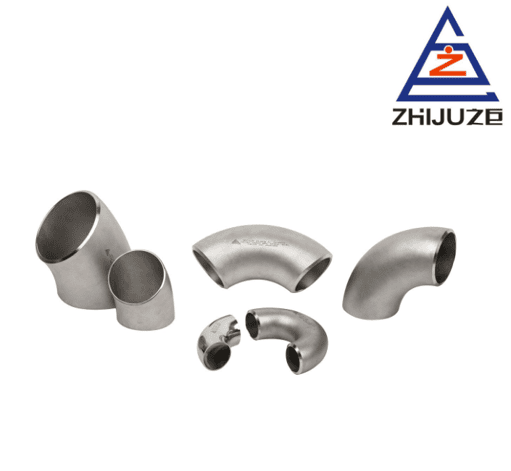
A stainless steel elbow fitting is a curved piping component designed to change fluid direction. Angles include 45°, 90°, and 180°, with the stainless steel 90 degree elbow being the most widely used. Made from alloys like 304, 316, and 321, these fittings resist rust, chemicals, and high temperatures. Stainless steel elbows are available in various sizes, from small-bore plumbing parts to large industrial units. Every pipe elbow plays a key role in maintaining flow stability and system integrity.
The core difference lies in manufacturing methods, which determine performance and application suitability.
Welded elbows start with flat stainless steel sheets. Blanks are cut, rolled into halves, and joined with a longitudinal weld. The seam is ground and polished for a smooth finish. This method is fast and cost-effective, ideal for mass production of standard elbow sizes. Still, the weld seam remains a structural weak point.
Seamless elbows are forged from solid steel billets. The billet is heated, pierced, and extruded into a seamless tube, then bent into shape without welding. The result is a uniform, continuous structure. Seamless manufacturing requires advanced equipment, raising costs, but delivers unmatched material consistency.
A clear welded vs seamless stainless steel elbow performance comparison shows distinct advantages.
Seamless elbows are stronger. No weld seam means uniform grain structure, withstanding up to 10,000 psi. They handle high-pressure systems safely. Welded elbows work well at pressures ≤3,000 psi, but seams create stress concentrations that risk failure under heavy loads.
Stainless steel elbows resist corrosion, but seamless versions perform better. Weld seams experience heat damage during welding, weakening the protective chromium layer. This leads to pitting or rust in harsh environments. Seamless elbows maintain consistent alloy composition, offering superior corrosion resistance.
The stainless steel 90 degree elbow comes in a wide range of sizes.
Small bore: 1/4″, 3/8″, 1/2″
Medium bore: 3/4″, 1″, 1-1/4″
Large bore: 2″, 3″, 4″
The 3/8 90 degree elbow suits small plumbing and instrumentation. The 3/4 90 degree elbow works for residential and light industrial use. The 1-1/4 90 degree elbow is common in water treatment and food lines.
The 3 inch 90 degree elbow serves heavy industrial flow. The 4 inch 90 degree elbow handles large-scale oil and gas transport.
The advantages of seamless stainless steel 90 degree elbow include:
Higher pressure resistance
Better corrosion protection
Uniform flow with no seam turbulence
Longer service life
Suitable for cryogenic and high-temperature systems

Application scenarios for welded stainless pipe elbow fittings include:
Residential and commercial plumbing
Low-pressure HVAC systems
Light industrial processing
Budget projects
Temporary installations
Follow how to choose welded or seamless stainless steel elbow:
High pressure → seamless
Corrosive environment → seamless
Food/pharmaceutical → seamless
Low pressure/budget → welded
Small bore → welded
Large bore → seamless
What is the main difference between welded and seamless elbows?
Welded elbows have a seam; seamless elbows are forged without seams.
Are seamless elbows always better?
Yes for high pressure or corrosion. Welded elbows work fine for low-risk projects.
What size elbows are most common?
3/4 90 degree elbow and 1 inch 90° elbow are standard.
Is ZHIJU a reliable elbow supplier?
Yes. ZHIJU offers high-quality welded and seamless elbow fittings in all sizes.
Choosing between welded and seamless stainless steel elbow depends on pressure, corrosion risk, and budget. Seamless elbows deliver superior strength and durability for industrial use. Welded elbows offer cost-effective solutions for standard applications. From 3/8 90 degree elbow to 4 inch 90 degree elbow, the right choice ensures safe, long-lasting piping. ZHIJU provides premium elbow fittings. Contact our team for professional selection guidance and customized solutions.

THE QUALITY IS THE SOUL OF AN ENTERPRISE
Zhejiang Zhiju Pipeline Industry Co., Ltd
Official Website: https://www.zhiju-steel.com
Privacy Policy
Copyright ZHEJIANG ZHIJU PIPELINE INDUSTRY CO., LTD SUPPORT BY :JUNJ