- Whatsapp: 8618958900507
- Email: [email protected]


When navigating the world of industrial piping systems, understanding the pipe elbow is essential for engineers, project managers, and procurement professionals. Among various fittings, the 90 degree pipe fitting plays a critical role by changing flow direction while maintaining system efficiency and safety.
In particular, the stainless steel 90 degree elbow is widely used due to its excellent corrosion resistance, strength, and long service life. Common sizes such as the 3 inch 90 degree elbow and 4 inch 90 degree elbow are frequently selected for HVAC, chemical processing, and oil & gas projects. This guide explains what a 90 degree elbow is, its key properties, common materials, size considerations, and how to choose the right option for your application.
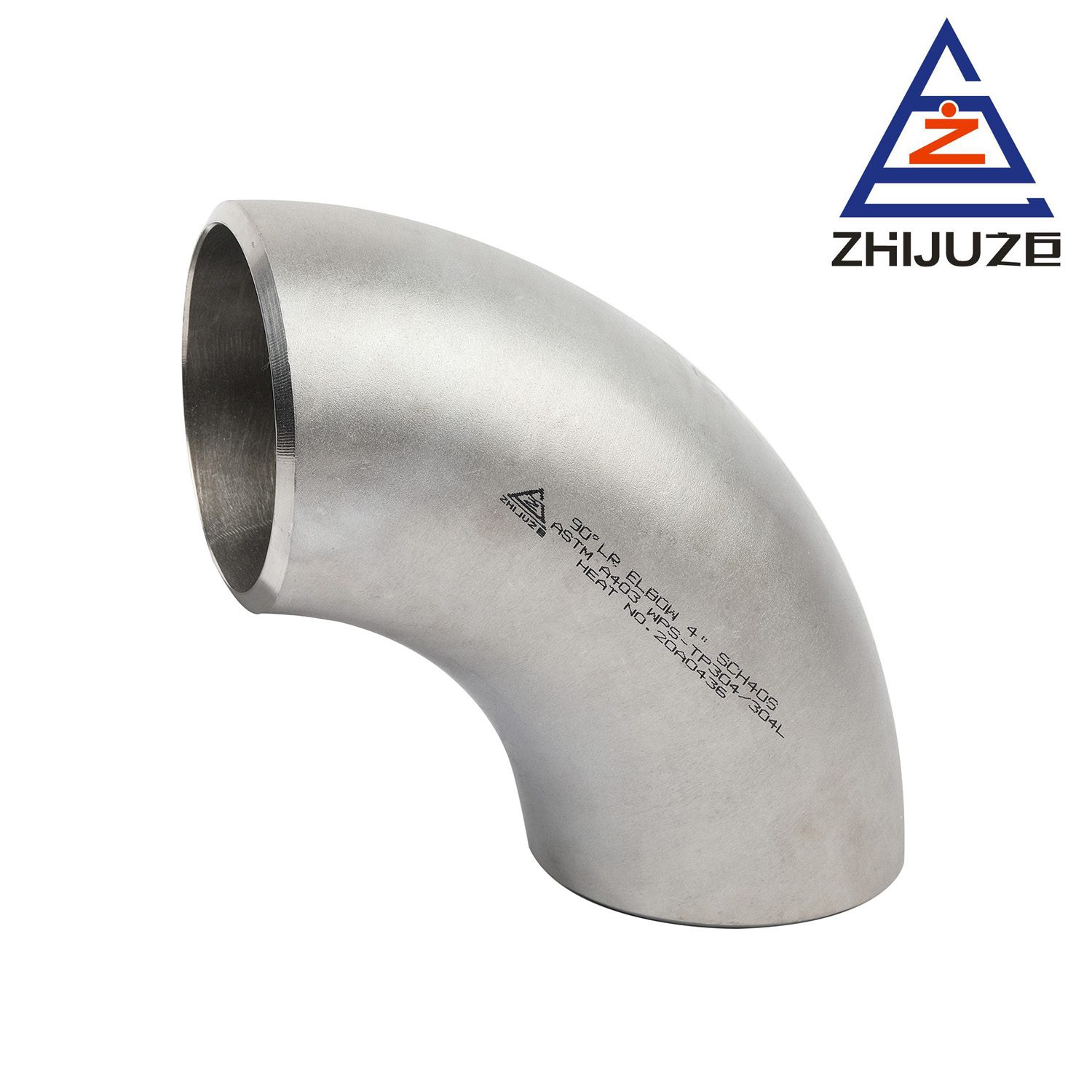 What Is a 90 Degree Elbow?
A 90 degree elbow is a type of pipe fitting elbow designed to connect two pipes at a right angle, allowing the flow direction to change by 90 degrees. It is one of the most commonly used fittings in both industrial and commercial piping systems.
Also known as a 90 degree pipe fitting, this component helps route pipelines around obstacles, fit layouts into confined spaces, and maintain continuous flow without excessive pressure loss.
Typical characteristics include:
Used across plumbing, HVAC, oil & gas, and chemical industries
Available as seamless or welded constructions
Manufactured in a wide range of materials and diameters
Compatible with standards such as ASTM, ASME, and ISO
A well-designed stainless steel elbow minimizes turbulence and pressure drop while redirecting flow. Long-radius elbows are especially effective at maintaining smooth flow paths in high-demand systems.
The pressure capacity of a stainless steel elbow fitting depends on material grade, wall thickness (schedule), and manufacturing method. Seamless elbows are often preferred for high-pressure applications, while welded elbows are commonly used for larger diameters.
Depending on the material, a Stainless pipe elbow can operate across a wide temperature range—from low-temperature processing environments to high-temperature steam or chemical systems.
Precision manufacturing ensures tight tolerances, proper alignment, and leak-free connections with adjoining pipes—essential for system reliability and safety.
Corrosion resistance is one of the most critical properties in harsh environments. The stainless steel 90 degree elbow performs exceptionally well due to its chromium and nickel content, protecting systems from rust, chemicals, and moisture.
Carbon steel: Strong and cost-effective but requires corrosion protection
Stainless steel: Durable, corrosion-resistant, and suitable for demanding environments
Copper: Common in plumbing due to antimicrobial properties
PVC / CPVC: Lightweight and corrosion-resistant for low-pressure applications
The stainless steel elbow is widely used in industries requiring hygiene, durability, and long-term performance. Common grades include:
304 stainless steel: Suitable for general industrial and food-grade applications
316 stainless steel: Offers enhanced resistance to chemicals and marine environments
A stainless steel elbow fitting provides an optimal balance of strength, corrosion resistance, and lifecycle cost, making it a preferred choice for critical piping systems.
Among various dimensions, the 3 inch 90 degree elbow and 4 inch 90 degree elbow are two of the most commonly sourced sizes in industrial projects.
| Size (Inch) | Typical Use Cases | Pressure Rating (PSI) | Material Options | Weight (Approx.) | Common Industries |
|---|---|---|---|---|---|
| 3 Inch | Medium-flow HVAC, water systems | Up to 3000 | Stainless steel, carbon steel | 1.5 – 2.5 kg | HVAC, plumbing, chemical |
| 4 Inch | Larger pipelines, industrial flow | Up to 2500 | Stainless steel, carbon steel | 2.5 – 4.0 kg | Oil & gas, manufacturing |
The 3 inch 90 degree elbow is ideal where space is limited but moderate flow is required, while the 4 inch 90 degree elbow is better suited for higher flow rates and larger industrial pipelines.
A pipe elbow is widely used across industries to redirect flow safely and efficiently, including:
Water treatment and wastewater plants
Oil and gas transmission pipelines
HVAC piping and duct systems
Chemical and petrochemical processing
Food and beverage sanitary piping systems
In corrosive or hygiene-sensitive environments, a Stainless pipe elbow is often the preferred solution due to its clean surface and resistance to contamination.
When selecting a pipe fitting elbow, consider the following factors:
Material compatibility with the conveyed fluid
Pressure and temperature requirements of the system
Pipe diameter and available installation space
Compliance with ASTM, ASME, or ISO standards
Balance between upfront cost and long-term durability
Choosing the correct stainless steel elbow fitting helps ensure system performance, safety, and reduced maintenance costs over time.
Understanding how a 90 degree pipe fitting works—and how to select the right one—plays a crucial role in building reliable, efficient, and long-lasting piping systems. From evaluating material performance to choosing the correct size, the stainless steel 90 degree elbow remains one of the most trusted solutions for demanding industrial environments.
Whether you are sourcing a 3 inch 90 degree elbow for compact systems or a 4 inch 90 degree elbow for high-flow industrial pipelines, focusing on corrosion resistance, pressure rating, and manufacturing standards will help reduce maintenance costs and extend service life.
At ZHIJU, we specialize in manufacturing and supplying high-quality stainless steel elbow fittings designed to meet international standards and real-world industrial requirements. If you are looking for a reliable supplier of stainless steel 90 degree elbows, our team is ready to support your project with expert guidance, consistent quality, and competitive lead times.
👉 Contact ZHIJU today to request technical specifications, pricing, or a customized solution for your piping system needs.
What is the main advantage of a stainless steel 90 degree elbow?
The stainless steel 90 degree elbow offers excellent corrosion resistance, strength, and durability, making it ideal for harsh and long-term applications.
Can 90 degree elbows be used in high-pressure systems?
Yes. Seamless stainless steel and carbon steel elbows are commonly rated for high-pressure industrial systems.
How do I choose between a 3 inch and 4 inch elbow?
Selection depends on flow rate, system capacity, and available space. A 3 inch 90 degree elbow suits moderate flow, while a 4 inch 90 degree elbow supports higher volumes.
Are there standards for pipe fitting elbows?
Yes. Common standards include ASTM, ASME, and ISO, ensuring dimensional accuracy and performance consistency.
What is the difference between seamless and welded elbows?
Seamless elbows are preferred for high-pressure and critical systems, while welded elbows are widely used for larger diameters and cost-sensitive applications.

THE QUALITY IS THE SOUL OF AN ENTERPRISE
Privacy Policy
Copyright ZHEJIAGN ZHIJU PIPELINE INDUSTRY Co.,Ltd SUPPORT BY :JUNJ