- Whatsapp: 8618958900507
- Email: [email protected]


In standard piping systems, off-the-shelf 90-degree and 45-degree elbows work perfectly. But industrial projects are rarely “standard.”
Whether you are retrofitting a chemical plant with tight space constraints or designing a complex skid for an offshore platform, you will inevitably face a situation where standard fittings just don’t fit. You need customized stainless steel pipe elbows.
At Zhiju Steel, we specialize in non-standard manufacturing. We know that ordering custom parts can be risky—delays, wrong dimensions, and material failures are common nightmares.
This guide will walk you through the top technical considerations—from “The Radius Trap” to elbow back arc thinning—to ensure you get exactly what your engineering drawings specify.
 2. What are Non-Standard Angles and Radii?
When we talk about custom pipe fittings, the most common request is for geometry that defies the standard catalog.
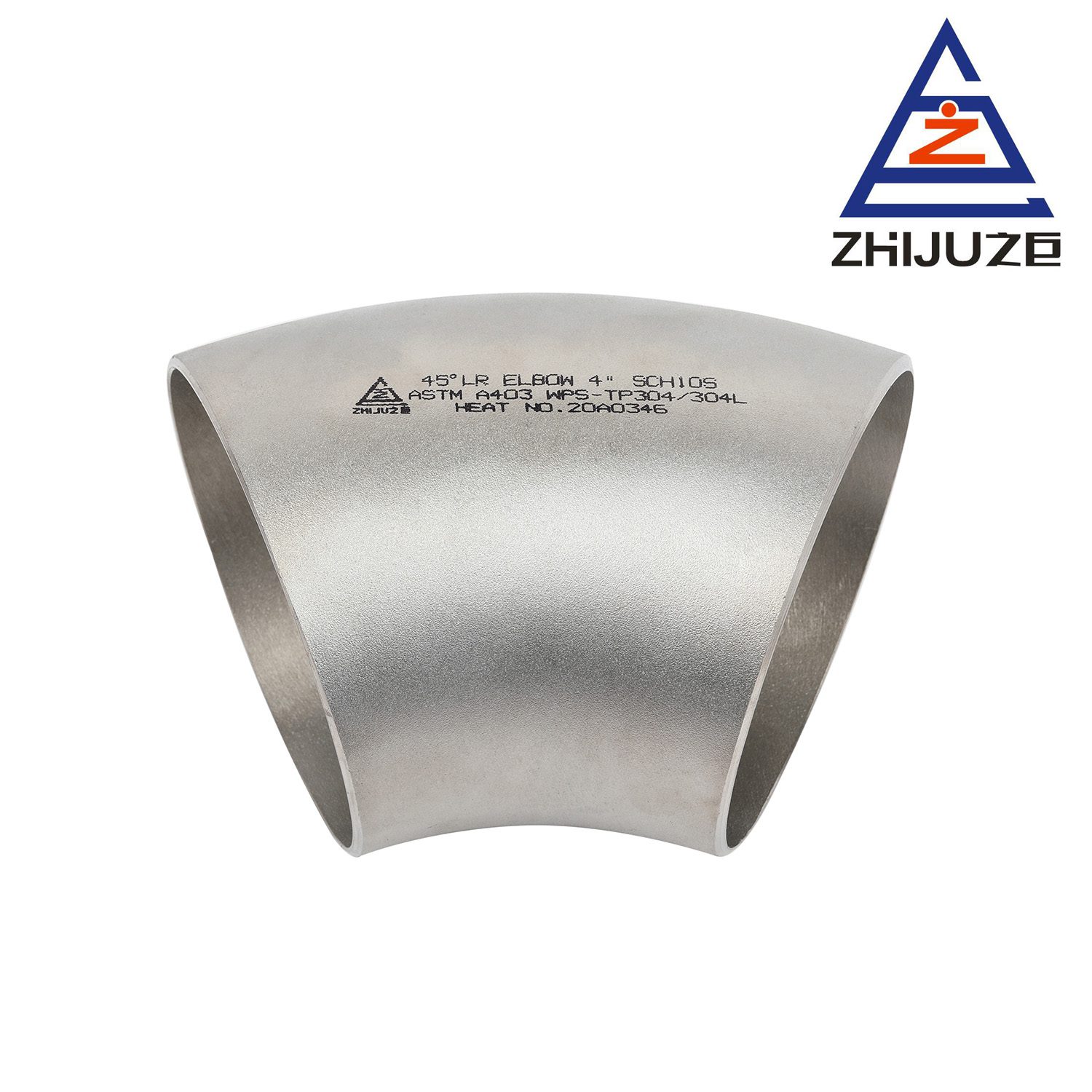
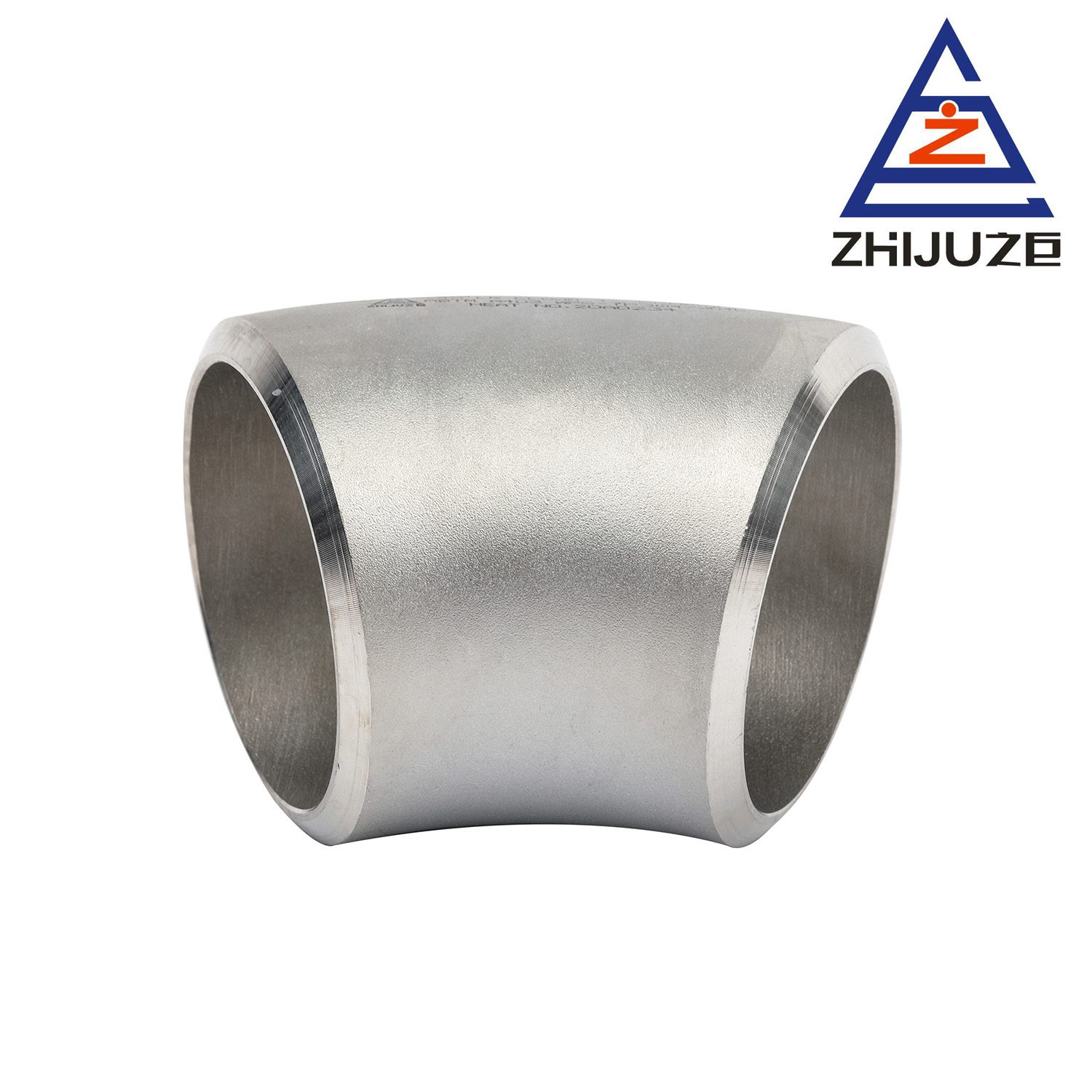
Standard elbows come in 45°, 90°, and 180°. However, a pipeline might need to turn at exactly 60° to clear a structural beam, or 30° to align with a pump.
The Zhiju Solution: Unlike some suppliers who roughly cut a 90° elbow (leaving a deformed edge), we manufacture non-standard pipe elbow angles—such as 15°, 30°, 60°, or 135°—directly from the mold or through precision cutting machines to ensuring the tangent length is preserved for easy welding.
This is a critical industry secret.
The Standard: A true Long Radius (LR) elbow must have a radius of 1.5D (1.5 times the nominal pipe size). This ensures smooth flow and minimal pressure drop.
The Trap: To save material costs, some manufacturers use molds that are only 1.25D. Visually, they look like LR elbows, but they restrict flow and increase turbulence.
Verification: When ordering customized stainless steel pipe elbows, always specify that you require strict adherence to long radius elbow dimensions (R=1.5D). Do not settle for “approximate” sizes.
If you are ordering elbows for high-pressure applications, this is the most important technical parameter.
The Physics of Bending:
When a straight pipe is pushed or bent into an elbow, the metal on the outside of the curve (the “Back Arc”) is stretched, while the inside (the “Intrados”) is compressed. This stretching naturally causes the wall thickness to decrease.
The Risk:
If a manufacturer uses a standard pipe blank to make the elbow, the back arc might become too thin to withstand the pressure, leading to a burst. This phenomenon is known as elbow back arc thinning.
The Solution:
To meet ASME B16.9 tolerances, Zhiju uses Over-Thickness raw pipes (e.g., using Sch 80 pipe to make a Sch 40 elbow). This ensures that even after stretching, the wall thickness at the back arc remains fully compliant with the pressure rating.
In the stainless steel market, ensuring you get what you pay for is vital. There is a visual similarity between Grade 201 (low quality), 304 (standard), and 316L (marine grade), but their corrosion resistance is vastly different.
The “Acid/Syrup” Test (Not Recommended):
Some blogs suggest using a chemical drop test (syrup) to distinguish materials. Do not rely on this. It is subjective, inaccurate, and cannot detect the specific Molybdenum content which defines 316L.
The Professional Way: PMI Testing
At Zhiju, we use PMI testing for stainless steel (Positive Material Identification) using an X-Ray Fluorescence (XRF) gun.
How it works: We point the gun at the stainless steel elbow fitting, and it instantly analyzes the chemical composition.
What we check: We verify that Nickel (Ni) and Molybdenum (Mo) percentages meet ASTM standards. This is the only way to guarantee your fittings won’t rust prematurely.
Customization isn’t just about shape; it’s about the finish.
End Bevels (The Connection):
Plain Ends (PE): Best for use with Slip-On Flanges.
Beveled Ends (BE): Standard for butt welding. However, for a stainless pipe elbow with heavy wall thickness, you might need a customized compound bevel (J-Bevel) for better welding penetration.
Surface Finish:
Sandblasted/Pickled: The standard industrial finish. Matte grey.
Polished (Grit 180/320): Required for food, beverage, or architectural applications where hygiene or aesthetics matter.
Ordering customized stainless steel pipe elbows shouldn’t be a gamble. It requires a manufacturer who understands the engineering behind the metal—from the physics of back arc thinning to the precision of the radius.
Zhiju Steel is not just a stockist; we are a manufacturer equipped to handle non-standard angles, strict wall thickness requirements, and rigorous material testing.
Have a complex piping drawing?
Don’t compromise your design. Send your specifications to us, and let our engineers calculate the precise blank size and manufacturing method for your project.

THE QUALITY IS THE SOUL OF AN ENTERPRISE
Privacy Policy
Copyright ZHEJIAGN ZHIJU PIPELINE INDUSTRY Co.,Ltd SUPPORT BY :JUNJ