- Whatsapp: 8618958900507
- Email: [email protected]


In the competitive world of industrial piping, engineers and project managers face a constant conflict: the need for high corrosion resistance versus the constraints of a tight budget.
Full stainless steel piping systems are excellent for preventing rust, but the cost of large-diameter stainless steel flanges can be astronomical. Is there a way to maintain the corrosion resistance of stainless steel while significantly lowering material costs?
The answer lies in a smart, cost-effective piping solution: the Stub End combined with a Lap Joint Flange.
At Zhiju, we have over 30 years of experience helping clients optimize their piping specifications. This article explains how stainless steel stub ends work and why they are the “secret weapon” for budget-conscious projects.
 2. What is a Stainless Steel Stub End?
A stub end is a short length of pipe with one end flared outward (forming a face) and the other end prepared to be welded to a pipe of the same diameter.
It is strictly a “fitting” and is never used alone. It is always paired with a backing flange, typically a Lap Joint Flange. This assembly consists of two distinct parts:
The Stub End: The part that actually touches the fluid inside the pipe (the wetted part). It is made of high-grade stainless steel (304 or 316L).
The Backing Flange: The part that slides over the stub end to bolt the connection together (the non-wetted part).
Because the backing flange sits loosely behind the flared face, this assembly is often referred to as a flange with stub end.
The primary reason to use this assembly is cost reduction. This is what we call the “Hybrid Material Strategy.”
Since the outer flange does not touch the corrosive fluid, you do not need to pay for expensive stainless steel for that part. You can use a cheaper Carbon Steel Lap Joint Flange (galvanized or painted) to hold the system together, while the stainless steel stub end handles the corrosion.
Cost Comparison (Example for 8-inch Pipe)
| Feature | Solid Stainless Steel Weld Neck Flange | Stub End + Carbon Steel Flange |
| Material Cost | very high | low |
| Wetted Material | Stainless Steel | Stainless Steel |
| Backing Material | Stainless Steel | Carbon Steel |
| Total Savings | 0% | ~30% – 50% Savings |
Note: The larger the pipe diameter, the more money you save by switching to stub ends.
Beyond material costs, the lap joint stub end assembly offers a massive advantage for installation crews: Free Rotation.
When using fixed flanges (like Weld Neck or Slip-On), the bolt holes of the two connecting flanges must align perfectly before welding. If the welder is off by just a few degrees, the bolts won’t fit, and the work must be redone.
The Solution:
With a stub end assembly, the backing flange can rotate 360 degrees around the pipe. This means you can weld the piping system first and simply rotate the flange to match the bolt holes later. This feature significantly speeds up field installation and reduces labor costs
When ordering stainless steel stub ends from a manufacturer like Zhiju, you must specify the correct standard. Choosing the wrong one can lead to dimensional mismatches.
Stub End Standards Comparison
| Standard | Pattern Type | Length | Best Application |
| MSS SP-43 | Short Pattern | Shorter | Low Pressure (Sch 10S/40S). Ideal for water treatment, pulp & paper. Most economical. |
| ASME B16.9 | Long Pattern | Longer | High Pressure. Heavy industrial applications requiring more weld space. |
Type A vs. Type B:
Type A: Fits standard Lap Joint Flanges.
Type B: Fits standard Slip-On Flanges (used as backing flanges).
While stub ends are versatile, they aren’t for every application. Use this checklist to decide which fitting fits your system.
Quick Selection Checklist
| Application Scenario | Recommended Fitting | Reason |
| High Pressure / Steam | Weld Neck Flange | Integral strength handles stress better. |
| Budget Sensitive | Stub End Assembly | Reduces alloy material cost. |
| Corrosive / Low Pressure | Stub End Assembly | Excellent corrosion resistance at lower cost. |
| Frequent Cleaning | Stub End Assembly | Easy to disassemble and re-align. |
| Critical Safety Lines | Weld Neck Flange | 100% X-Ray testable welds. |
Ideal Industries for Stub Ends:
Water Treatment & Desalination
Food & Beverage Processing
Chemical Processing (Low Pressure)
Marine & Shipbuilding
Established in 1991, Zhiju Steel understands that the reliability of a piping system depends on the quality of its fittings. We focus on strict compliance and testing.
For our stainless steel stub ends, we implement the following quality controls:
Material Compliance (PMI Testing): We use Positive Material Identification guns to verify that every 316L stub end contains the correct amount of Molybdenum and Nickel to prevent rust.
Dimensional Precision: We strictly check the Lap Joint Radius and flare face flatness to ensure a leak-proof seal with the flange.
Surface Treatment: All stainless steel fittings undergo solution annealing and pickling to maximize corrosion resistance.
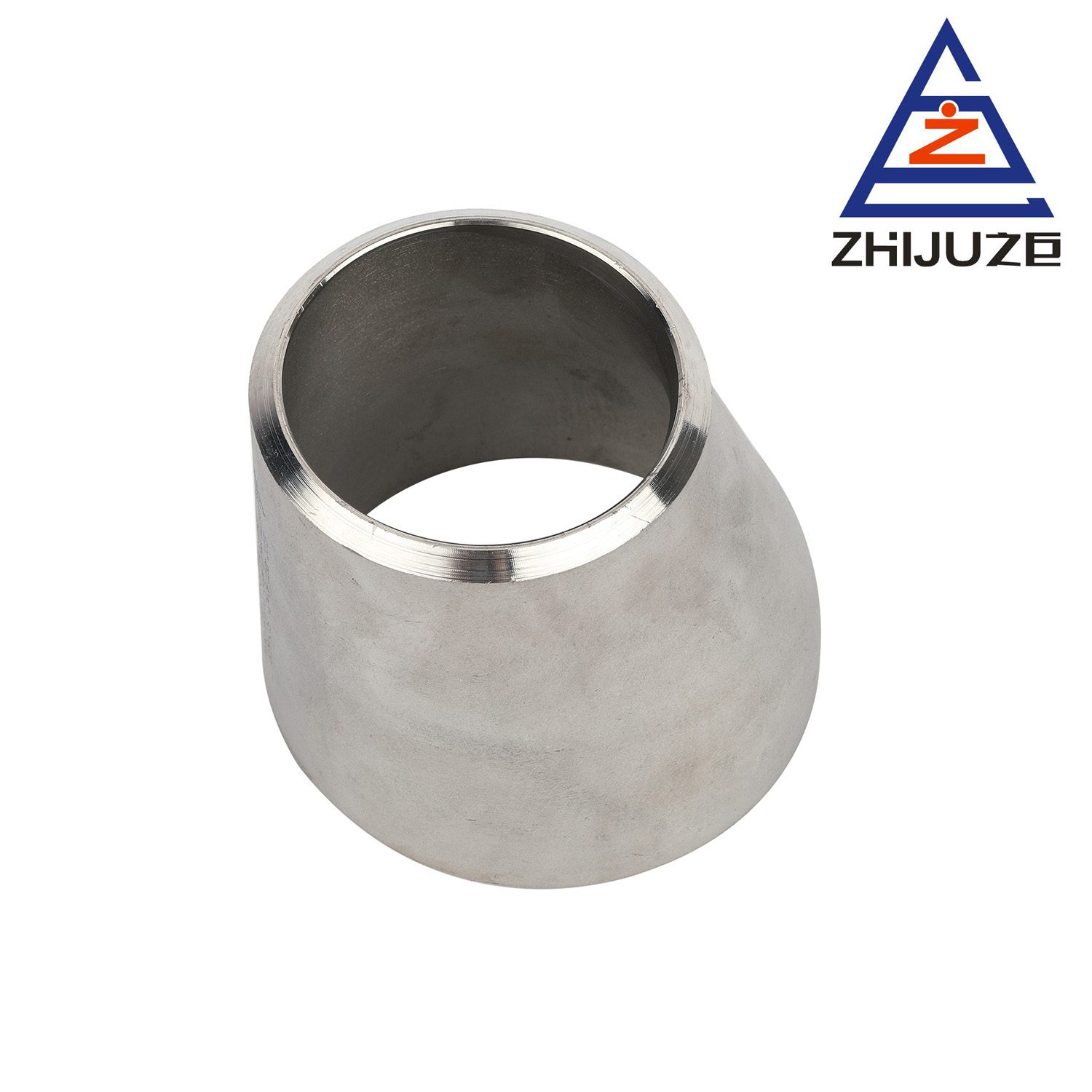
We supply the complete system: Stub Ends, Pipe Caps, Reducers, and Tees, so you can consolidate your order.
Using a stub end flange assembly is a smart engineering choice. It allows you to utilize the corrosion resistance of stainless steel where it matters, while reducing costs by using economical backing flanges.
Don’t overspend on your next piping project.
If you are looking for reliable MSS SP-43 stub ends or need a cost comparison for your project, Zhiju Steel is ready to help.
[Contact Us] today for a catalog or a competitive quote.


THE QUALITY IS THE SOUL OF AN ENTERPRISE
Privacy Policy
Copyright ZHEJIAGN ZHIJU PIPELINE INDUSTRY Co.,Ltd SUPPORT BY :JUNJ