- Whatsapp: 8618958900507
- Email: [email protected]


In industrial piping systems, changing the pipe diameter is a frequent necessity. However, simply connecting a large pipe to a small pipe isn’t as straightforward as it seems. Choosing the wrong type of pipe reducer can lead to serious issues, including pressure drop, turbulence, and the most dangerous enemy of pumps: cavitation.
At Zhiju Steel, we manufacture high-quality stainless reducers for industries ranging from oil & gas to food processing. We often receive inquiries from customers asking: “Should I use a concentric or an eccentric reducer for my pump suction line?”
This guide will break down the technical differences between concentric vs eccentric reducer types, explain their flow dynamics, and help you decide which one is right for your specific piping configuration.
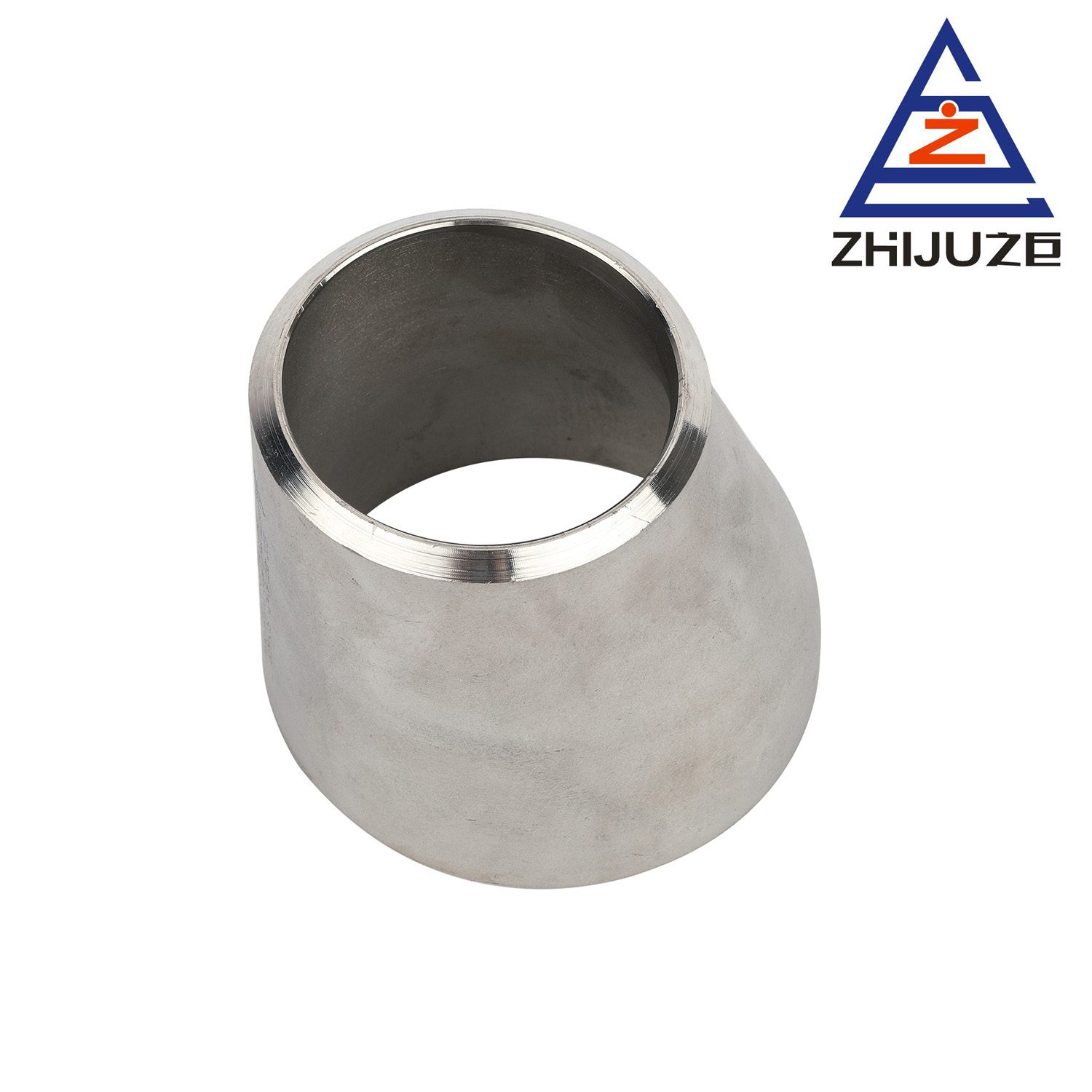 What is a Stainless Steel Concentric Reducer?
A stainless steel concentric reducer is a cone-shaped pipe fitting used to join two pipes of different diameters. As the name suggests, the centerlines of the inlet and outlet are perfectly aligned.
Visually, it looks like a symmetrical funnel. Because the reduction in diameter is uniform around the pipe, concentric reducers provide a smooth transition for fluid flow. They are the most common type of reducer used in the industry because they are generally less expensive to manufacture and easier to align during installation.
Key Characteristics:
Shape: Symmetrical, cone-shaped.
Alignment: Centerlines match.
Primary Use: Vertical pipelines.
An eccentric reducer is designed with one side flat and the other side tapered. The centerlines of the inlet and outlet are offset (not aligned).
This unique “flat-bottom” or “flat-top” design is not for aesthetics; it serves a crucial engineering function. In horizontal piping lines, the shape of the eccentric reducer allows for the proper management of air and fluid drainage, which we will explore in the next section.
Understanding when to use which fitting depends largely on two factors: the orientation of the pipe ( horizontal vs vertical pipe reducer application) and the equipment it connects to.
Concentric: Reduces the pipe size evenly. If you look at it from the end, the smaller opening is perfectly in the middle of the larger opening.
Eccentric: Reduces the pipe size mainly from one side. The “flat” side is parallel to the connecting pipe.
This is the most critical technical difference.
Concentric Reducers can trap air bubbles at the top of the pipeline when used horizontally. If these air pockets enter a pump, they can cause cavitation—a phenomenon that creates shock waves, damages the pump impeller, and reduces efficiency.
Eccentric Reducers eliminate this risk. By aligning the flat side with the top of the pipe, air can pass through without getting trapped.
For eccentric reducers, proper orientation is vital. Installation mistakes here are common causes of system failure.
When installing an eccentric reducer on the suction side of a horizontal pump, you must install it “Flat Side Top” (TF).
Why? This prevents air pockets from forming at the top of the reducer. Air pockets can restrict flow or be sucked into the pump, causing cavitation.
When the pipe is resting on a support rack or sleeper, you typically install it “Flat Side Bottom” (BF).
Why? This keeps the bottom of the pipe elevation constant, making it easier to support the piping system.
In steam lines or applications where drainage is critical, a “Flat Side Bottom” installation allows condensate or liquid to drain completely without pooling at the reducer step.
At Zhiju Steel, we manufacture reducers that strictly adhere to international standards to ensure compatibility and safety.
Our fittings comply with ASME B16.9 reducer standards for factory-made wrought butt weld fittings. This ensures that the wall thickness, bevels, and dimensions match the mating pipes perfectly.
We offer reducers in various grades to suit your environment:
304/304L: Ideal for general corrosion resistance.
316/316L: Recommended for marine or high-chloride environments.
Whether your system requires a light wall steel pipe reducer schedule 40 or a heavy wall Schedule 80 for high pressure, the dimensions are critical. Engineers should always refer to a standard butt weld reducer dimensions chart before ordering to ensure the “End-to-End” length fits the piping layout.
Choosing the right reducer is about more than just matching sizes.
Use a stainless steel concentric reducer for vertical pipelines where flow disruption is minimal.
Use an eccentric reducer (Top Flat) for horizontal pump suction lines to prevent air traps and cavitation.
By selecting the correct stainless reducers, you extend the lifespan of your pumps and ensure the safety of your piping system.
Ready to order?
Zhiju Steel provides high-quality, customized butt weld fittings for global industries.
[Contact Us Today] for a quote on your project requirements.


THE QUALITY IS THE SOUL OF AN ENTERPRISE
Privacy Policy
Copyright ZHEJIAGN ZHIJU PIPELINE INDUSTRY Co.,Ltd SUPPORT BY :JUNJ