- Whatsapp: 8618958900507
- Email: [email protected]


In any industrial piping system, every line must eventually come to an end. While flanges with blind plates are used when future extension is required, the permanent solution for closing a pipe end is the Butt Weld Cap.
Often overlooked, this component is critical. It acts as the “full stop” of the system, meaning it must withstand the same internal pressure, temperature, and corrosive forces as the pipe itself.
At Zhiju Steel, we find that many procurement errors happen here—specifically regarding wall thickness and pressure calculations. This guide will explain exactly what a butt weld pipe cap is, why its shape matters, and how to weld it correctly.
 2. What is a Butt Weld Pipe Cap? (Geometry & Shape)
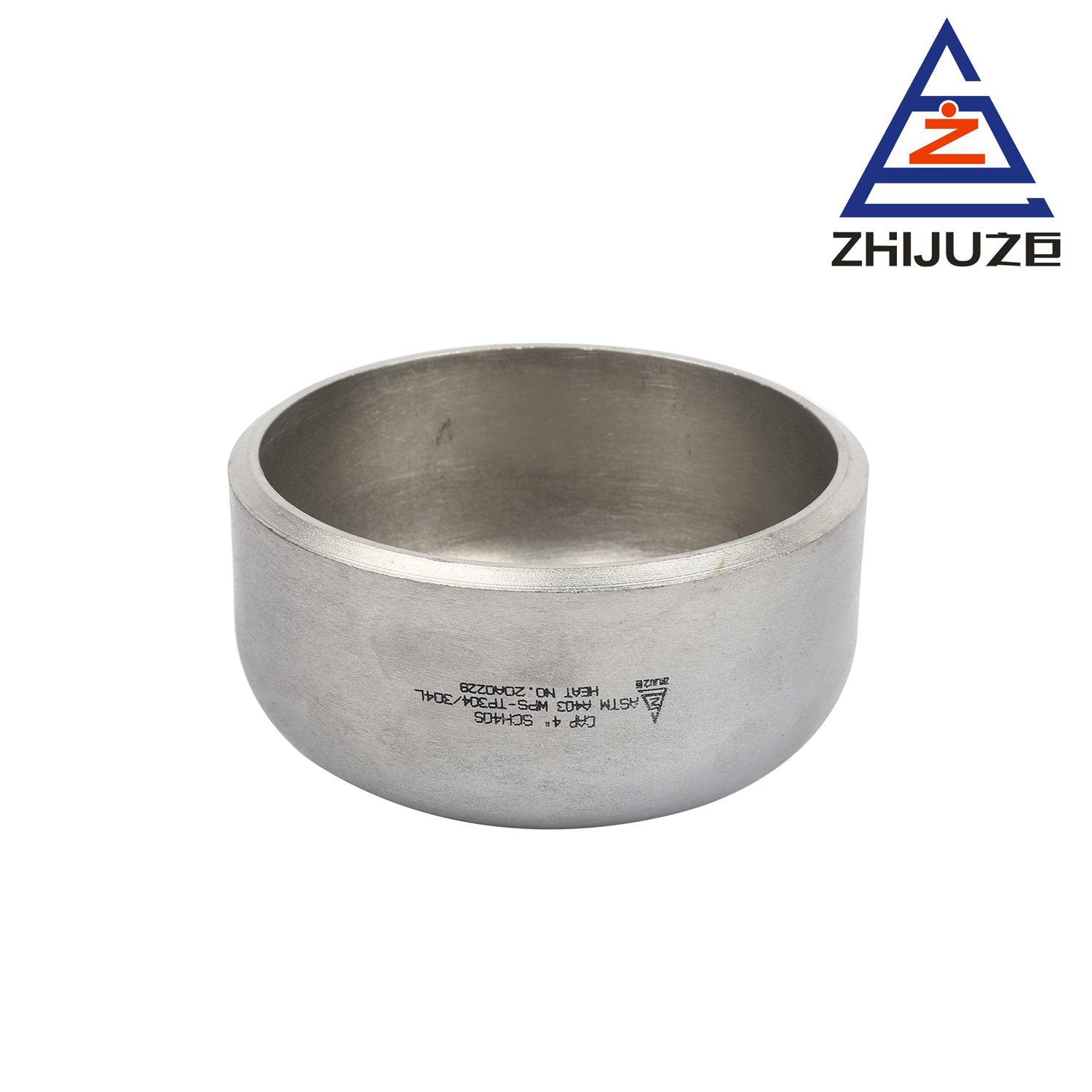
A butt weld pipe cap is a pipe fitting designed to be welded to the open end of a pipe to block the flow of fluid. Unlike a flat plate, a standard weld on pipe caps steel fitting usually features a specific aerodynamic shape.
According to ASME B16.9 standards, most caps are manufactured with a 2:1 Ellipsoidal head shape.
Why not flat? A flat shape would bulge under high pressure. The ellipsoidal shape distributes stress evenly across the surface, making the cap stronger and more material-efficient.
Have you ever noticed that a cap isn’t just a dome? It has a short, straight cylindrical section at the end called the Tangent Length (E) or “straight skirt.”
Function: This straight section moves the weld zone away from the high-stress “knuckle” radius of the cap.
Benefit: It allows the welder to perform a proper butt weld without damaging the structural integrity of the cap’s curve.
When ordering stainless steel buttweld caps, you need to look beyond just the diameter. At Zhiju Steel, we adhere to the ASME B16.9 manufacturing standard.
Key dimensions you must check:
NPS (Nominal Pipe Size): Matches the pipe size (e.g., 4 inch).
Wall Thickness (Schedule): This determines the pressure rating.
Total Height (E): The distance from the bevel to the top of the dome.
Note on Sizes:
For small sizes (below 2 inches), caps are sometimes confused with “plugs.” Remember, a butt weld end cap is hollow and welded, whereas a plug is solid and often threaded.
This is the most common question we receive: “What is the pressure rating of this cap? Is it Class 3000?”
Here is the rule: Butt weld caps do not have a standalone pressure rating. Their rating is determined by the pipe they are welded to.
The pressure rating is calculated based on the Schedule (Wall Thickness) and the material grade.
If you are welding to a Schedule 40 pipe, you must use a Schedule 40 pipe cap.
If your system is high-pressure and uses Schedule 80 pipe, you must order schedule 80 pipe caps.
As long as the buttweld end cap has the same wall thickness and material grade as the seamless pipe, it has the exact same burst pressure rating as the pipe itself.
Choosing the right material for your weld end cap is vital for preventing corrosion.
304/304L Stainless Steel: The standard choice for general water, air, and non-aggressive chemical lines. It offers excellent durability at a lower cost.
316/316L Stainless Steel: Essential for marine environments, brine water, or chemical processing where chlorides are present. The added Molybdenum prevents pitting corrosion.
At Zhiju, we ensure all our stainless buttweld caps undergo PMI testing to verify their chemical composition before shipping.
Installing a butt weld pipe cap requires skilled labor. Since it creates a permanent seal, any defect in the weld can lead to leaks or rupture.
Top 3 Welding Tips:
Bevel Preparation: Ensure the beveled end of the cap is clean. Remove any oil, paint, or rust. For stainless steel buttweld caps, use a stainless-steel wire brush to avoid carbon contamination.
Proper Fit-Up: The inner diameter of the cap must match the pipe’s inner diameter (“ID matching”). If they are misaligned, it creates a ledge that causes turbulence and corrosion.
Tack Welding: Use at least four tack welds around the circumference to hold the cap in place and prevent it from warping during the final weld.
As a manufacturer, quality control starts before the cap is even formed.
Forming: We use cold forming or hot forming depending on the size and thickness.
Heat Treatment: This is non-negotiable for stainless steel caps. After forming, the metal structure is stressed. We perform Solution Annealing to restore the corrosion resistance of the stainless steel.
Surface Finish: We offer pickling or sandblasting to ensure the steel buttweld caps look professional and resist rust.
The butt weld end cap is a small but mighty component. Whether you are closing a pipeline for maintenance or terminating a header, choosing the right dimension and schedule is crucial for safety.
Key Takeaways:
Always match the Cap Schedule to the Pipe Schedule.
Look for the Tangent Length to ensure easy welding.
Choose 316L for high-corrosion environments.
Need high-quality caps?
Zhiju Steel manufactures stainless buttweld caps from 1/2″ up to 48″ with strict adherence to ASME B16.9.
[Contact Us Today] for a quote or to download our dimensions chart.

THE QUALITY IS THE SOUL OF AN ENTERPRISE
Privacy Policy
Copyright ZHEJIAGN ZHIJU PIPELINE INDUSTRY Co.,Ltd SUPPORT BY :JUNJ