- Whatsapp: 8618958900507
- Email: [email protected]


In any industrial piping system, the straight pipes rarely cause problems. The failures—leaks, cracks, and bursts—almost always happen at the “joints” and “turns.” The most vulnerable component is the pipe elbow.
Why? Because an elbow is where the fluid is forced to change direction. This creates turbulence, pressure spikes, and physical impact that straight pipes simply don’t experience.
At Zhiju Steel, we have analyzed thousands of replaced fittings. We found that most failures aren’t random; they are predictable. Whether you are using a standard carbon steel fitting or a high-grade stainless steel elbow fitting, understanding the root causes of failure is the first step to preventing costly downtime.
This article explores the three biggest killers of pipe elbows: Erosion, Corrosion, and Fatigue.
 2. Cause #1: Erosion (The “Sandblasting” Effect)
Erosion is a physical process. Imagine driving a car and taking a sharp turn at high speed; your tires skid against the road. The same happens inside a pipe elbow.
When fluid flows through an elbow, centrifugal force throws heavier particles (like sand, catalyst fines, or slurry) against the outer wall (extrados) of the bend. Over time, this acts like a sandblaster, thinning the metal wall until it bursts.
Even in clean fluids, high velocity can cause flow accelerated corrosion (FAC). This occurs when the turbulence is so strong that it strips away the protective oxide layer on the metal surface, exposing fresh metal to further attack. This cycle of “strip-oxidize-strip” rapidly eats through the elbow wall.
The Fix:
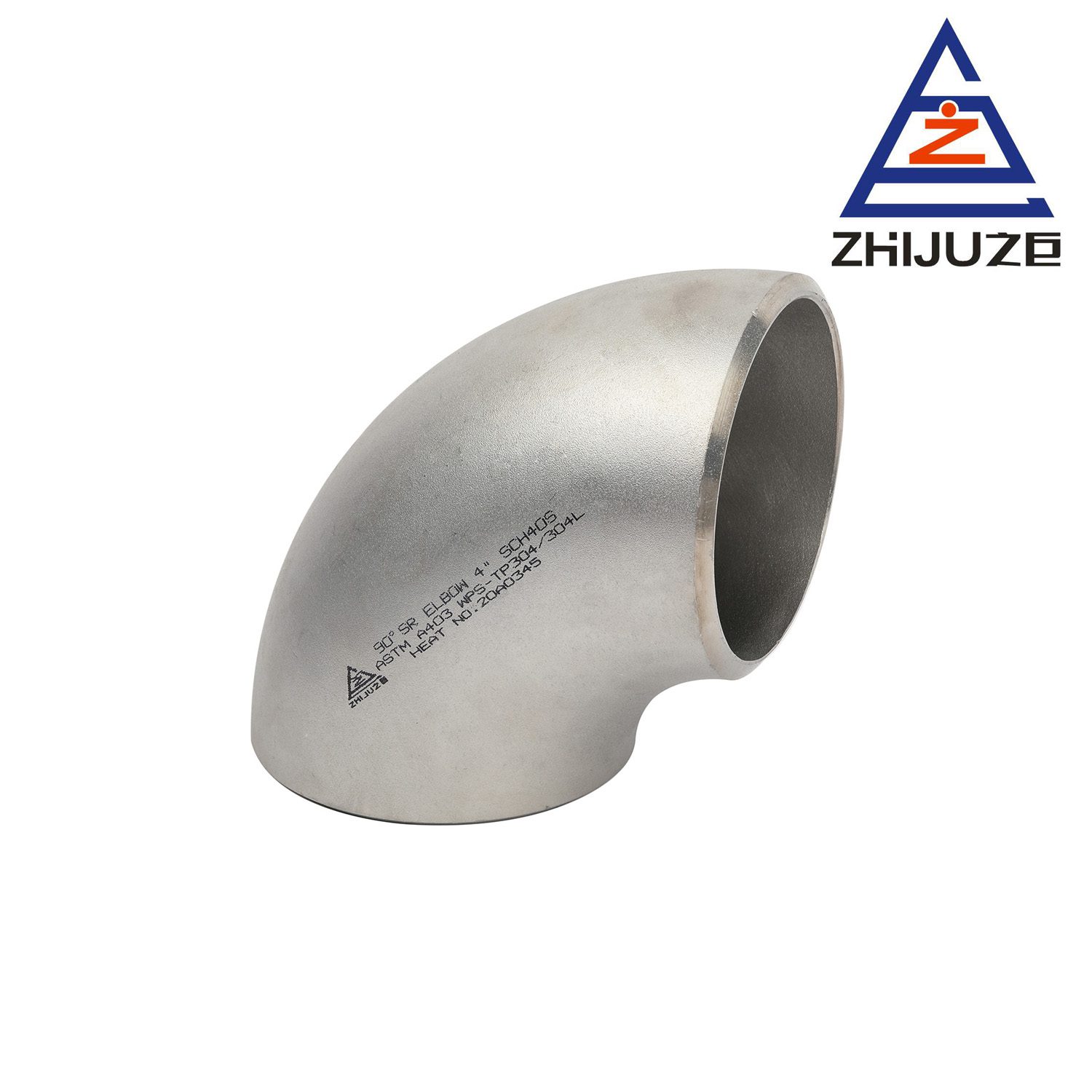
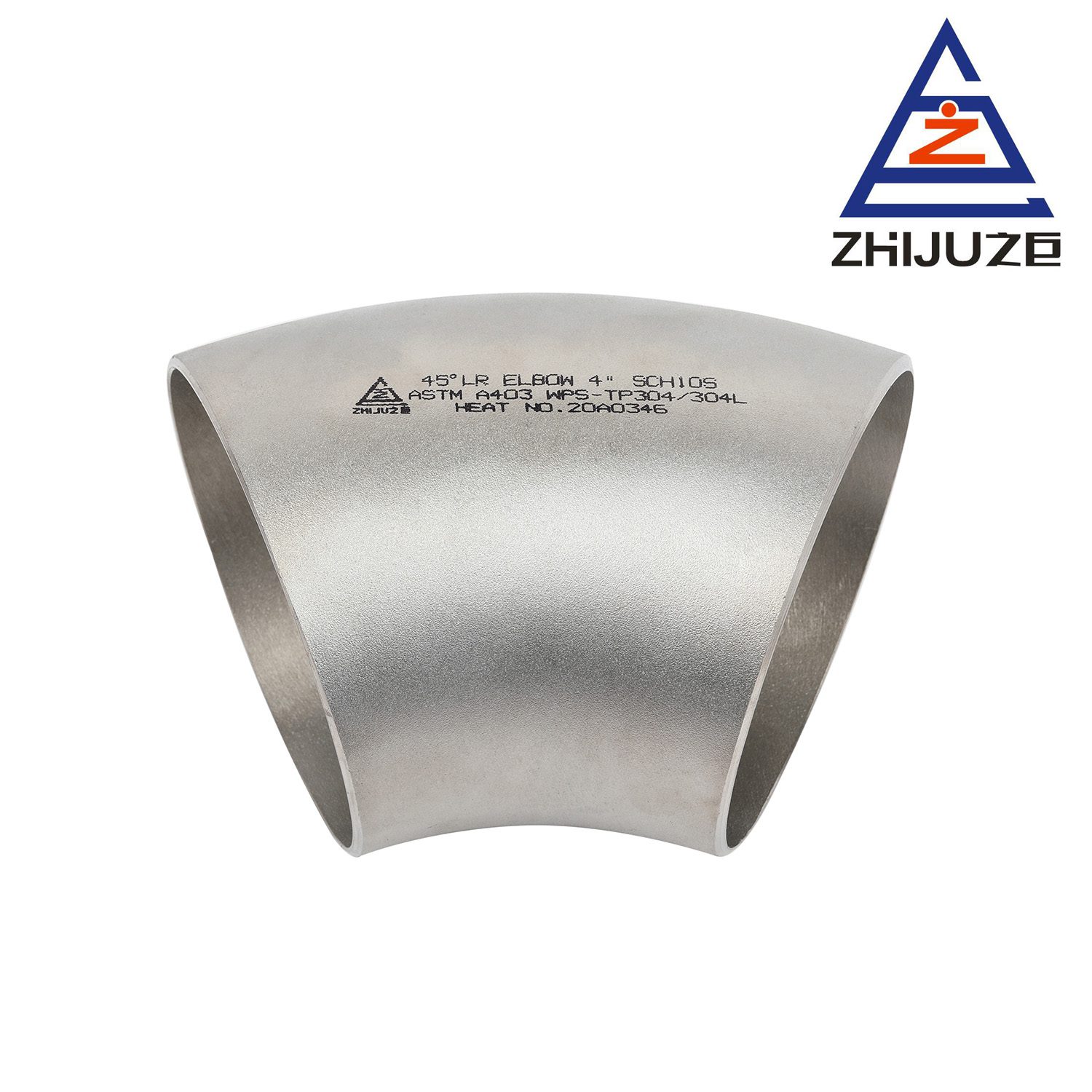
Geometry: Use Long Radius (LR) elbows (1.5D) instead of Short Radius (SR) to reduce the angle of impact.
Thickness: Choose a heavier Schedule (e.g., Sch 80 vs Sch 40) to provide extra material allowance.
While erosion is physical, corrosion is chemical.
Stainless steel relies on a thin “passive film” to prevent rust. However, in an elbow, the combination of turbulence and aggressive chemicals can compromise this film.
One of the most insidious forms is pitting corrosion in stainless steel. This usually happens in environments containing chlorides (like seawater or brine). The chlorides attack specific spots on the elbow surface, drilling deep, microscopic holes that can cause leaks even if the rest of the pipe looks new.
If you are using a standard Stainless pipe elbow (Grade 304) in a marine or chemical environment, you are at high risk.
The Fix:
Material Upgrade: Utilize 316 stainless steel corrosion resistance. The addition of Molybdenum in 316/316L grade significantly improves resistance to pitting and chloride attack.
Mechanical fatigue is the silent killer. It doesn’t thin the wall; it cracks it.
Piping systems are constantly moving due to thermal expansion (heating up and cooling down) and pump vibrations. A high pressure pipe elbow acts as a stiff “anchor point” in the system. It absorbs the bending moment caused by these movements.
Over thousands of cycles, these microscopic stresses accumulate, leading to fatigue cracks. These cracks typically initiate at the weld heat-affected zone (HAZ) or at the “crotch” (intrados) of the elbow where stress is concentrated.
The Fix:
Support: Ensure proper pipe supports are installed near the elbow to absorb vibration.
Quality Manufacturing: Use elbows with uniform wall thickness and precise bevels (like those from Zhiju) to ensure a smooth, stress-free weld.
Prevention is always cheaper than repair. Here is a checklist for effective pipe fitting maintenance and selection:
Check Fluid Velocity: If the velocity is high, do not use Short Radius elbows. The turbulence will cause erosion.
Match Material to Media: If the fluid contains chlorides, upgrade to 316L or Duplex Stainless Steel.
Monitor Wall Thickness: For critical lines, use ultrasonic testing on the outer curve of the elbow to check for thinning.
Inspect Welds: Ensure the weld between the pipe and elbow is smooth. Rough welds create turbulence that accelerates failure.
Pipe elbows are the “muscles” of your piping system—they take the hardest hits from pressure, flow, and vibration. A failure in an elbow can shut down your entire operation.
Don’t settle for generic fittings that may have uneven wall thickness or poor heat treatment.
At Zhiju Steel, we manufacture high-quality stainless steel elbow fitting products designed to withstand erosion, corrosion, and fatigue. We control the forming process to ensure the outer arc remains thick and durable.
Need reliable fittings?
Contact Zhiju Steel today for a quote on our erosion-resistant 304L and 316L elbows.

THE QUALITY IS THE SOUL OF AN ENTERPRISE
Privacy Policy
Copyright ZHEJIAGN ZHIJU PIPELINE INDUSTRY Co.,Ltd SUPPORT BY :JUNJ